
An extension keeps your current lease alive and simply pushes out the end date. A renewal ends that lease and replaces it with a new one, which means rent, clauses, and even your legal standing can shift. Get this wrong and you either lose concessions you thought were locked in, or you miss the window to renegotiate terms that no longer suit your business.
The immediate move: pull out your lease and find your notice or option deadline. Most commercial leases give a notice window of several weeks to a few months before expiry, and missing it can force you into an extension you didn’t plan for, or a holdover with no fixed terms at all.
- Extension = same contract, new date. Renewal = new contract, new everything.
- Check who has to sign: tenant, landlord, and guarantor may all need to countersign, depending on your lease.
- If you’re within 90 days of expiry, treat this as urgent, not routine paperwork.
Key Takeaways
A lease extension continues your existing contract on the same terms with a new end date, while a lease renewal replaces it entirely and reopens rent, options, and make-good terms for negotiation.
| Point | Details |
|---|---|
| Extension keeps continuity | Original covenants and concessions carry forward unless the addendum changes them. |
| Renewal resets the contract | Rent-free periods and guarantor terms must be restated explicitly or they can lapse. |
| Check option transferability | Renewal options are sometimes personal to the original tenant and won’t survive assignment. |
| Start early | Begin renewal talks well before expiry to avoid a forced holdover tenancy. |
| Get tenant-side advice | Niche Advisory represents tenants through renewal, renegotiation, and make-good disputes. |
Table of Contents
- Lease Extension vs Renewal: The Core Definitions
- What Legal Rights Survive an Extension vs a Renewal
- How to Extend or Renew: Step-by-Step Timelines
- What Belongs in an Extension Deed or Renewal Lease
- Where Lease Negotiations Go Wrong
- Renew, Extend, or Renegotiate: How to Decide
- Negotiation Checklist and Sample Wording
- How Niche Advisory Helps With Renewals and Extensions
- Frequently Asked Questions
- Sources
Lease Extension vs Renewal: The Core Definitions
A lease extension is an addendum to your existing lease. It keeps the original terms intact and adjusts the expiry date only, which is why extensions usually skip the heavy administrative process a full renewal demands. A lease renewal is a different animal entirely: it’s a new, standalone document that replaces the old lease and opens every clause back up for negotiation, from rent to fit-out obligations.
Picture a small logistics tenant who just needs another four months to finish a fit-out elsewhere. An extension handles that cleanly, no renegotiation, no fresh legal review, just a signed addendum. Now picture a landlord who spent $200,000 upgrading a building’s lobby and HVAC system last year. They’re not interested in an extension that locks in old rent. They want a renewal, because that’s the only mechanism that lets them reset the rent to reflect the upgrade.
- Extension: same lease, new expiry date, minimal paperwork.
- Renewal: new lease, renegotiated terms, full document replacement.
- Extensions suit stable relationships; renewals suit shifting market conditions or upgraded premises.
What Legal Rights Survive an Extension vs a Renewal
This is where most tenants get caught out. A renewal creates what lawyers sometimes call a fresh legal instant in time. Anything not expressly restated in the new lease can simply vanish, including rent-free periods, personal covenants, and guarantor arrangements. An extension, by contrast, preserves the leasehold estate’s continuity, so those rights generally carry forward unless the addendum itself changes them.
Assignment rights and renewal options don’t automatically follow either. If your original lease grants a renewal option that’s personal to you as the named tenant, that option may not transfer to a buyer of your business unless the lease expressly allows assignment of the option. Make-good obligations can also be re-triggered by a renewal, particularly if the new lease resets the reinstatement clause to current building standards rather than the condition at original handover.
Then there’s holdover risk. If you stay in occupation past your expiry date and the landlord keeps accepting rent without a signed extension or renewal, courts may treat that as a periodic tenancy on similar terms to the old lease, rather than the negotiated outcome either party expected.
- Rent-free periods and rebates: restate them explicitly or risk losing them in a renewal.
- Guarantor status: confirm whether the guarantee carries over or needs a fresh deed.
- Renewal options: check if they’re personal to you or assignable.
- Make-good obligations: confirm which condition standard applies, original handover or current.
Pro Tip: Never assume silence means continuity. If a concession, guarantee, or option isn’t written into the new document, treat it as gone the moment you sign a renewal.
How to Extend or Renew: Step-by-Step Timelines
The two processes look similar on paper but move at different speeds. Here’s how each one typically runs.
Extension workflow:
- Confirm your lease has an extension or option clause and check the notice window.
- Draft a short addendum recording the new expiry date and any restated concessions.
- Get signatures from tenant, landlord, and guarantor if required.
- Register the extension with the relevant land titles office if the original lease was registered.
Renewal workflow:
- Review current market rent and comparable lease terms 90 or more days before expiry.
- Propose new terms in writing, covering rent, term length, and any operational changes.
- Negotiate the sticking points, rent review formula, make-good, assignment rights.
- Draft a full new lease and formally surrender or terminate the old one on execution.
Extensions can often be turned around in weeks because they require far less paperwork than a full renewal. Renewals need more lead time precisely because they reopen negotiation, and advisers recommend starting the process well before the option window closes rather than waiting until the deadline forces your hand. Involve a solicitor or tenant adviser early, and gather your current lease, guarantor deed, and any prior option notices before your first conversation with them.
What Belongs in an Extension Deed or Renewal Lease
Whether you’re signing a one-page addendum or a full new lease, certain clauses have to be there or you’re exposed. Missing headings are the single biggest cause of post-signing disputes.
- Parties and signatures, including any guarantor.
- Term dates, both start and new expiry.
- Rent and the rent review mechanism, including whether reviews are fixed, CPI-linked, or market-based.
- Security and guarantor status, restated explicitly if it’s meant to continue.
- Assignment and subletting rights, and whether any renewal option is personal or transferable.
- Make-good and reinstatement standard, tied to a specific condition benchmark.
- Insurance obligations, notice procedures, and a dispute resolution clause.
The most common trap is vague option language, wording that says a tenant “may seek to renew” without specifying the process, notice period, or rent-setting mechanism. Formal extension documents should record the rent for the further term and spell out how and when future reviews happen, not leave it to later goodwill. Also check stamp duty and registration requirements, since some states require lodging an extension or renewal if the remaining term crosses a statutory threshold.
Pro Tip: If your current lease includes a rent-free period or fit-out contribution, name it specifically in the new document. “As per the original lease” is not good enough once that original lease is superseded.
Where Lease Negotiations Go Wrong
Most disputes trace back to a handful of recurring issues, and nearly all of them are avoidable with earlier preparation.
- Missing the notice or option deadline, which can force a tenant into a weaker negotiating position or a default holdover.
- Assuming a renewal option is automatically assignable when the lease says it’s personal to the original tenant.
- Rent review formulas that read fine in principle but produce a shock figure once applied, especially market-review clauses with no cap.
- Ambiguity over who carries make-good and fit-out dilapidation costs at the end of the term.
The negotiation flashpoint is usually simple: landlords lean toward a renewal because it lets them reset rent to market, while tenants often prefer an extension because it locks in the status quo. Tenants frequently underestimate the size of make-good liabilities until they’re already mid-negotiation, which is exactly the wrong time to discover a six-figure reinstatement bill. Waiting too long to start this process is what pushes tenants into month-to-month arrangements or lost options entirely.
Pro Tip: Diarize your option deadline the day you sign a new lease, not six months before it expires. By the time most tenants start looking, the strongest negotiating leverage has already passed.
Renew, Extend, or Renegotiate: How to Decide
Run through these questions before you commit to either path.
- Do you only need more time on the same terms, with nothing else changing? If yes, an extension is usually the faster, cheaper route.
- Has the market shifted, or has the building been upgraded since you signed? If yes, a renewal lets both sides reset rent and clauses to reflect that.
- Do you need to change operational terms, like assignment rights, fit-out allowances, or the make-good standard? Only a renewal reopens those clauses.
- Are you assigning the business soon? Confirm whether your renewal option survives assignment before you extend or renew.
A retail tenant with two years left on a favorable lease and no plans to change footprint is a clean extension case. A warehouse tenant whose rent has fallen well below current market, sitting next to a landlord eager to reprice, is a renewal conversation waiting to happen.
Negotiation Checklist and Sample Wording
Before you call a lawyer or tenant adviser, assemble the essentials: current lease and any amendments, the rent currently payable, option or renewal notices already served, guarantor details, and your fit-out or make-good schedule. Handing over a complete file on day one saves weeks of back and forth.
Two short wording examples worth keeping on file:
- Confirm current rent, term dates, and any rent review mechanism in writing.
- List every option, concession, and guarantor obligation before drafting begins.
- Bring your fit-out and make-good schedule to the first meeting with your adviser.
If assignment, a market reset, or a disputed make-good figure is on the table, that’s the point to bring in a specialist leasing lawyer or tenant adviser rather than handling it in-house.
A tenant adviser’s take on lease timing
Lease expiry is a strategic moment, not paperwork to rush through. Business tenants who default to an extension purely for convenience often leave real value on the table, whether that’s a rent reduction the market supports or better assignment rights. An extension is defensible when nothing material has changed. It costs you more, long term, when the market has moved and you didn’t check.

How Niche Advisory Helps With Renewals and Extensions
Deciding between a renewal and an extension gets easier with someone who negotiates leases for a living reading the fine print alongside you. Niche Advisory represents tenants through lease renewals, renegotiations, and make-good disputes, working only for the tenant’s side of the table rather than splitting loyalties with the landlord. That independence is the practical difference: an adviser paid by the landlord has no incentive to push for the rent reduction or assignment right that actually benefits you.

Before your first conversation, have three things ready: your current lease and any prior notices, your critical dates (especially your option or notice deadline), and a plain statement of what you want out of the negotiation, whether that’s more time, better rent, or updated make-good terms. Niche Advisory’s lease renegotiation process walks through how that timeline typically runs, and if make-good is your main concern, the make-good obligations breakdown covers what to check before you sign anything. Start the conversation before your option window closes, not after, by reaching out through Niche Advisory’s main site.
Frequently Asked Questions
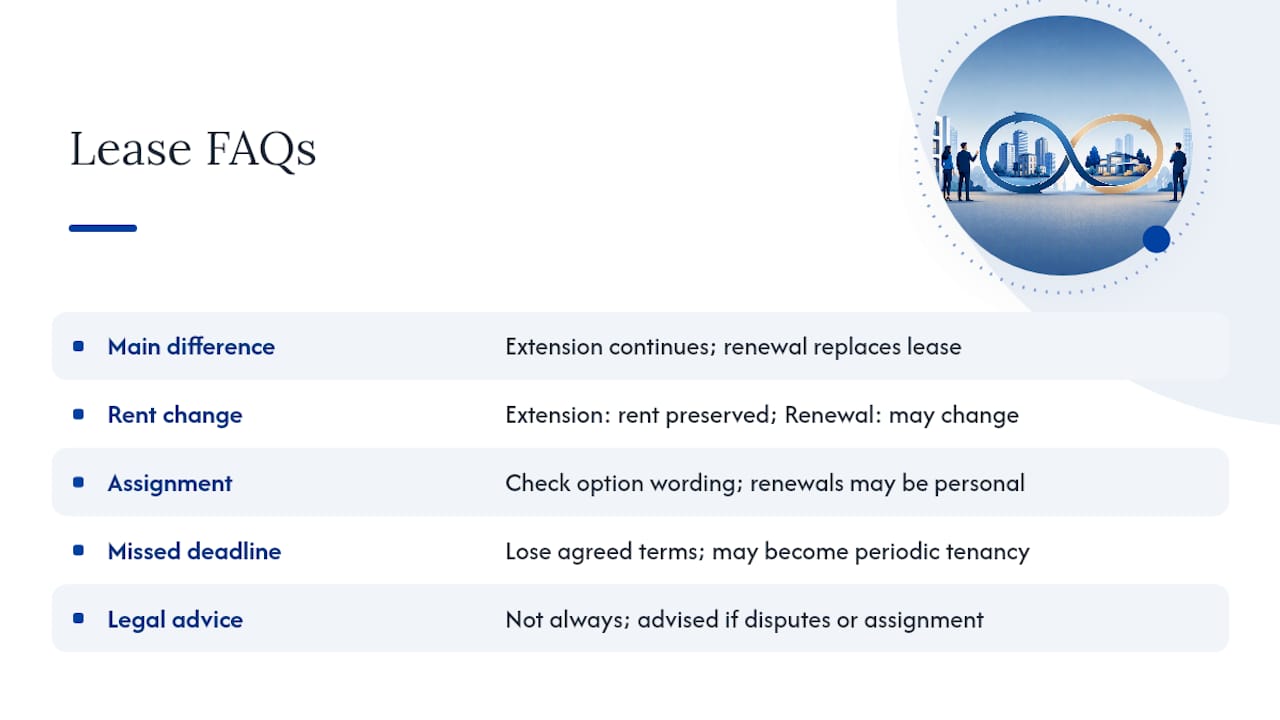
What’s the main difference in lease renewal vs extension?
An extension continues your current lease with a later expiry date. A renewal ends that lease and replaces it with a new one, opening rent, term, and clauses back up for negotiation.
Does a lease extension change my rent?
Usually not. Extensions typically preserve the existing rent unless the addendum specifically states otherwise, while renewals are the point where rent is most likely to shift.
Can I renew a lease if I’m assigning my business soon?
Check the option wording first. Some renewal options are personal to the original tenant and won’t automatically transfer to a buyer unless the lease says so.
What happens if I miss my option deadline?
You may lose the right to renew on the agreed terms, and if you stay in occupation while the landlord keeps accepting rent, you could end up in a periodic tenancy with far less certainty than a negotiated renewal or extension.
Do I need a lawyer for a simple extension?
Not always, if the addendum is short and restates all existing concessions clearly. Once assignment, rent disputes, or make-good disagreements enter the picture, a tenant adviser or specialist leasing lawyer is worth the cost.
This article is general information, not a substitute for advice from a qualified lawyer. Consult a qualified legal professional about your own circumstances before acting on anything here.
Sources
Hand these to your legal adviser if your renewal or extension escalates into a dispute:
- Lease Extension Agreements for Australia
- Lease assignment review — renewal, fit‑out and exit points to compare
- Lease Extension Agreement Template and Tips | Buildium
- Modification, Extension, and Renewal of Lease Transactions – Wallace, Richardson, Sontag & Le, LLP
- Lease extension vs renewal: Know the differences