A decant strategy is a structured plan to temporarily relocate staff, patients or residents so a facility can undergo renovation or construction without stopping operations. The goal is safety, continuity and compliance, not just moving furniture. Facility or project managers should lead the plan, but infection prevention and control (IPC) and work health and safety (WHS) teams need a seat at the table from day one.
TL;DR:
- Precise planning, including stakeholder consultation and infection control measures, is essential to prevent delays and ensure safety during occupied space decants.
- Building a detailed schedule with contingency allowances and implementing site controls like hoarding and airlocks minimizes contamination risks during construction next to occupied areas.
- Using standardized templates for feasibility, scheduling, and inspections helps maintain control and document compliance throughout the decant process.
- Appointing specialized project management support is recommended when managing complex, multi-site moves, or when internal capacity is limited.
- Maintaining residents’ placement status and negotiating funding arrangements before the move helps protect operational continuity and reimbursement.
Table of Contents
- When to plan a decant: typical use cases and scope
- Step-by-step decant process: feasibility, phasing and schedule of works
- Stakeholder governance and consultation: meeting WHS duties
- Infection prevention and control: what must be included for occupied works
- Operational continuity: bed, patient and resident movement and funding arrangements
- Risk controls and site measures during decant: containment, monitoring and audits
- Practical templates and checklists to copy and adapt
- How Niche Advisory runs decant programmes
- When to appoint a specialist adviser and how Niche Advisory helps
- Sources
- FAQ
When to plan a decant: typical use cases and scope
A decant plan is warranted whenever works will displace people from an occupied space for a temporary period. That covers a wider range of situations than most estate teams expect.
- Ward or clinical area upgrades where beds, equipment or patients must move during refurbishment.
- Aged care room renovations requiring residents to shift to another wing or facility temporarily.
- Office estate consolidations or fitouts across one or more floors.
- Multi-project campus works where several buildings are staged over the same period.
The objective is always the same: keep services running, limit infection or safety risk, and meet the WHS and accreditation duties that apply to occupied workplaces. On larger estates, a single decant should never be planned in isolation. Treating it as one piece of a broader estate masterplan helps avoid the same temporary works being repeated project after project.
Step-by-step decant process: feasibility, phasing and schedule of works
A decant runs in four broad phases, each with its own deliverables.
- Feasibility. Survey vacant or swing space, draft an accommodation brief, and weigh temporary builds against simply reallocating existing space.
- Phasing decisions. Choose between bay-by-bay moves for small clinical areas, modular relocations for larger cohorts, or a full-area decant when the whole zone needs to close.
- Timeline development. Build the schedule of works with contingency time built in for approvals and for unexpected finds such as asbestos or structural defects, which should sit as separate line items rather than absorbed into the main programme.
- Handover. Run pre-occupancy and post-occupancy inspections against agreed criteria, then formally sign off the space for return to use.
Good work design principles applied at the planning stage, rather than bolted on afterwards, remain the most effective way to remove hazards before they become live risks during the move, according to WorkSafe Queensland. A detailed accommodation brief at the feasibility stage prevents most of the scope disputes that surface later in a project.
Pro Tip: Keep one live schedule of works document with dated stakeholder sign-offs. It becomes the single reference point everyone checks before reoccupation.
Stakeholder governance and consultation: meeting WHS duties
A person conducting a business or undertaking (PCBU) is strongly advised to consult, cooperate and coordinate with everyone who holds a WHS duty on the project, and to document that consultation. The WHS consultation, cooperation and coordination Code of Practice sets out practical mechanisms for structuring this during relocation and refurbishment works.
- Nominate a single project officer to own communication and record-keeping.
- Involve facilities management, IPC leads, clinical or bed managers, and relevant unions from the outset.
- Set a fixed meeting cadence with clear sign-off points rather than ad hoc approvals.
- Keep a written consultation record that can be produced if challenged later.
Skipping this step is the most common cause of delays once works are already underway.
Infection prevention and control: what must be included for occupied works
In any clinical or aged care setting, IPC involvement is not optional. The Australasian Health Facility Guidelines Part D requires IPC input for all building, refurbishment and maintenance work, feeding into a Construction and Redevelopment Infection Control Management Plan (CR-ICMP).
Construction and refurbishment within a health service require a formal, documented approach to infection control risk, according to Queensland Health guidance, which typically mandates IPC checklists, ongoing monitoring and direct engagement of IPC professionals throughout the works.
- Prepare the CR-ICMP before any intrusive works begin, not once they are underway.
- Set clinical triggers for relocating high-risk patients ahead of dust or noise-generating activity.
- Define IPC sign-off criteria that must be met before a space is reoccupied.
- Build in enhanced cleaning and air monitoring wherever containment barriers are breached.
IPC input late in the process usually means expensive redesign work, and it puts both patient safety and accreditation status at risk.
Operational continuity: bed, patient and resident movement and funding arrangements
Moving people is only half the job. Providers must also protect their funding and placement arrangements throughout the temporary period.
- Maintain the resident’s placement status rather than processing a formal discharge, even for an extended temporary move, as set out in Department of Health guidance on relocating aged care residents.
- Negotiate reimbursement or brokerage arrangements between the original and temporary provider in advance, not after the move.
- Engage the relevant state or territory health office early if administrative support is needed to formalise the arrangement.
- Document the expected return date and the conditions for reversing the placement.
A combined advisory and relocation approach can help settle these commercial and funding questions alongside the physical move, rather than treating them as an afterthought.
Risk controls and site measures during decant: containment, monitoring and audits
Works running next to occupied areas need physical and procedural controls that hold up under scrutiny.
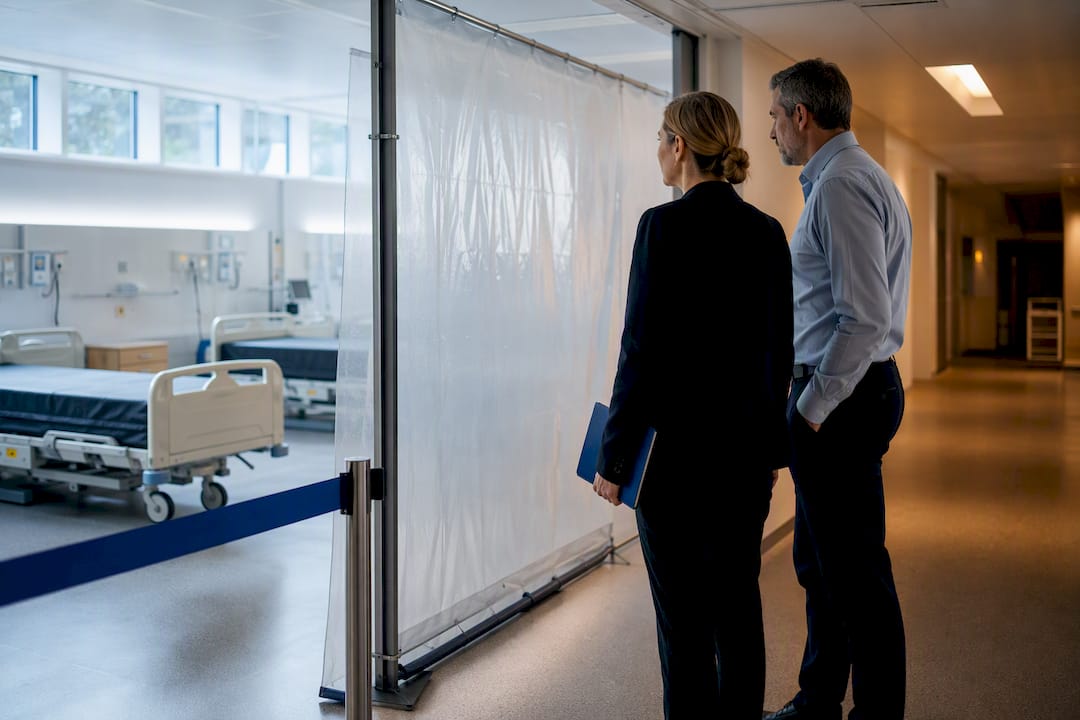
- Install floor-to-ceiling hoarding and airlocks between the works zone and occupied space.
- Use dust mats and controlled debris routes to stop contamination migrating into clean areas.
- Run site inductions for every contractor before they set foot in an occupied facility.
- Schedule routine IPC inspections with a clear reporting loop back to the project officer.
- Set environmental monitoring thresholds and a defined breach response before works start.
Regional health guidance on construction in clinical facilities points to the same pattern: identify at-risk populations, assess ventilation impacts, and set a monitoring frequency before work begins, not once problems appear.
Pro Tip: Use a simple audit template that records inspection date, finding, corrective action and sign-off. It turns a subjective walkthrough into evidence you can produce later.
Practical templates and checklists to copy and adapt
A decant programme is easier to run when the paperwork is standardised from the start.
- Feasibility checklist: vacant space survey, accommodation brief, build-versus-relocate decision.
- Schedule of works: phasing sequence, milestone dates, contingency allowance, approval gates.
- Stakeholder sign-off log: WHS consultation record, IPC approval, clinical lead sign-off.
- Occupancy inspection form: pre-occupancy condition, post-occupancy condition, reoccupation criteria met.
- Phasing matrix: area, occupant type, temporary location, IPC sign-off status.
Keep every document version-controlled against the master schedule of works, so nobody is working from an outdated sign-off sheet.
How Niche Advisory runs decant programmes
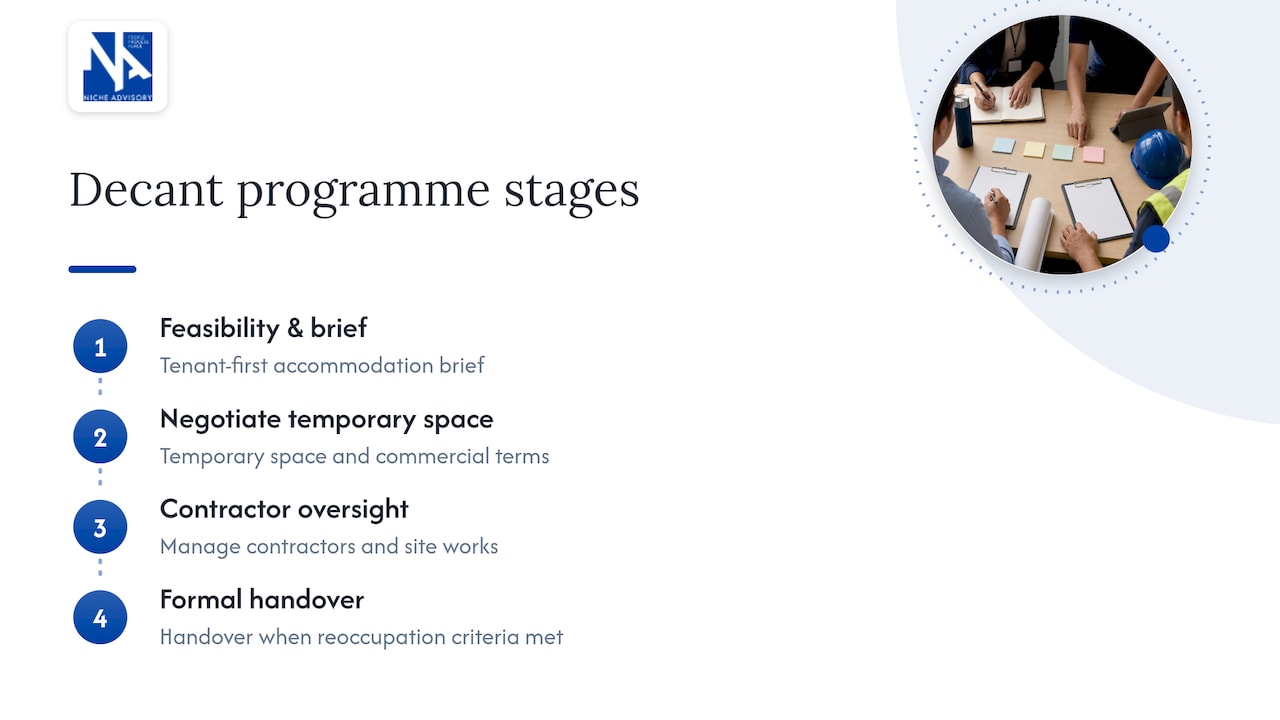
The advisory firm applies an end-to-end, tenant-first methodology built over many years across corporate and workplace projects. Engagements typically start with feasibility and an accommodation brief, move through negotiation of temporary space and commercial terms, and extend into contractor oversight during works. Because the firm acts exclusively for tenants and owner-occupiers, advice on space and timing stays aligned with the occupier’s operational needs rather than a third party’s interests. A typical programme finishes with formal handover once agreed reoccupation criteria are met.
When to appoint a specialist adviser and how Niche Advisory helps
Multi-site complexity, accreditation risk or thin internal project capacity are the usual signs a decant needs outside help. Niche Advisory’s project and construction management service covers feasibility through to contractor oversight and handover, giving facility teams a single point of accountability for the whole move.
Sources
- Moving residents between rooms and temporary relocation — Department of Health (Australia)
- Good work design — WorkSafe Queensland
- Australasian Health Facility Guidelines (AusHFG) Part D: Infection prevention and control
- Construction, redevelopment and the built environment — Queensland Health
FAQ
What is the decant technique?
The decant technique is the practice of temporarily moving occupants, whether staff, patients or residents, out of a space so building works can proceed safely. It relies on a documented schedule of works, WHS consultation and, in clinical settings, IPC sign-off before the space is reoccupied.
What does decanting mean in facility management?
In facility management, decanting means relocating people or operations out of an area under renovation and back in once works are complete. It is distinct from a permanent move because the placement, funding and space allocation are all intended to be temporary.
What are common decanting mistakes to avoid?
The most common mistakes are starting works before IPC and WHS consultation is documented, and failing to negotiate funding or brokerage arrangements before residents or patients move. Skipping contingency time for unexpected finds such as asbestos is another frequent cause of schedule blowouts.
Does moving a resident temporarily affect their aged care placement?
No, providers are expected to maintain a resident’s placement status during a temporary relocation rather than treating it as a discharge, according to Department of Health guidance. Reimbursement or brokerage terms between the original and temporary provider should be agreed before the move happens.