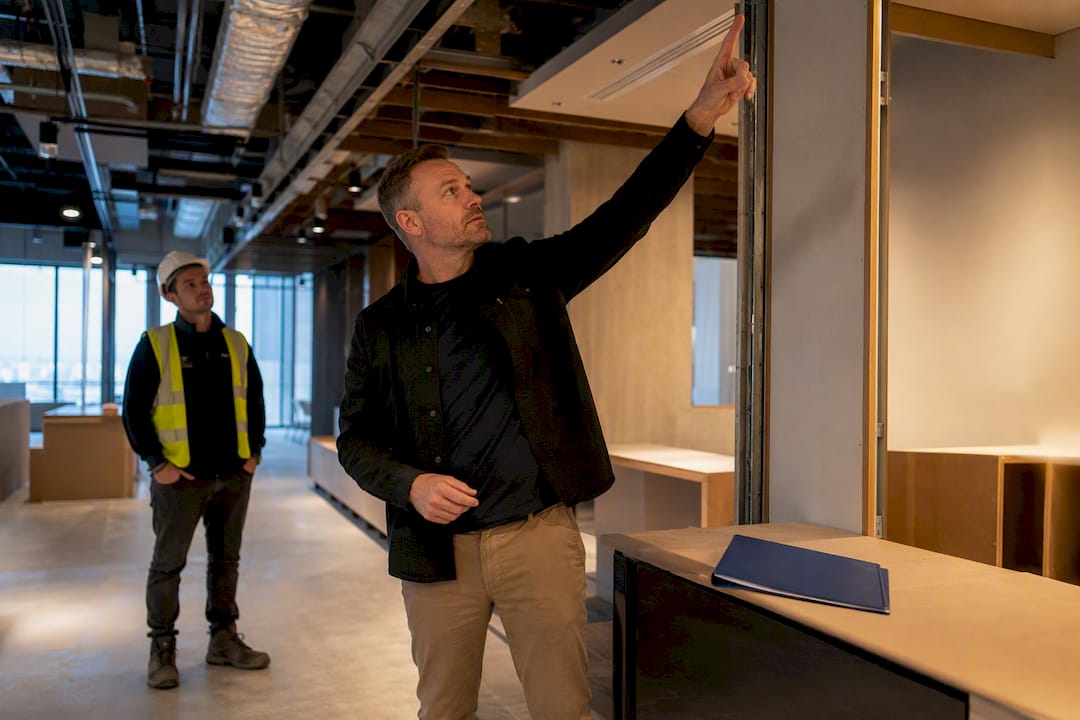
Run your Parramatta office relocation as a tightly scheduled 8 to 12 week project. Appoint an internal move coordinator, engage a commercial mover and an IT specialist, and confirm City of Parramatta approvals plus lift and loading bookings well before the date is locked in. That combination is the single biggest predictor of a relocation that doesn’t blow the budget or the timeline. For anything involving IT complexity, overlapping leases, or landlord negotiations, an experienced relocation adviser can run the whole project for you.
TL;DR:
- Securing permits, building approvals, and lift bookings at least six to eight weeks before the move reduces delays and unexpected costs.
- Using itemized quotes and planning for after-hours charges from multiple movers prevents budget blowouts and hidden fees.
- Confirming IT connectivity and backup plans outside business hours minimizes disruptions and ensures a smooth transition.
- Appointing an experienced relocation adviser is essential for complex moves involving overlapping leases, landlord negotiations, or extensive IT migration.
- Checking city approvals and booking logistics well in advance helps avoid last-minute permit issues and scheduling conflicts.
Table of Contents
- Office relocation timeline for Parramatta businesses
- What does a Parramatta office move actually cost?
- How do you choose the right removalist for an office move?
- How do you protect IT systems during an office move?
- What does move day actually look like?
- What happens in the first 48 hours after moving in?
- Do you need council approval to relocate offices in Parramatta?
- When should you bring in a relocation adviser?
- Where to check the details before you commit
- Sources
Office relocation timeline for Parramatta businesses
Most Parramatta office moves fail on sequencing, not effort. Teams start packing before they’ve confirmed the lift booking, or they order furniture before the fit-out is signed off. Working backwards from move day fixes that.
- Weeks 10 to 12: Lock in your lease start date and confirm whether the new premises need a Development Application or falls under complying development. City of Parramatta’s development and building approval guide sets out exactly which fit-out works trigger an approval before you commit to a date.
- Weeks 6 to 8: Audit every physical and digital asset going to the new site, notify staff of the move date, and start shortlisting removalists and IT providers. Commercial movers active in the Parramatta market recommend booking 6 to 8 weeks ahead to secure the crew size and vehicle access you actually need.
- Weeks 4 to 6: Finalise quotes, book storage if there’s any gap between vacating and occupying, secure lift and loading dock windows with both buildings, and start packing anything not needed for daily operations.
- Weeks 2 to 3: Finish packing and labelling, confirm the IT cutover plan with your provider, and test connectivity at the new site before anyone relies on it.
- Final week: Run a full walkthrough with every supplier, assign move-day roles and contact numbers, and write down your contingency plan for the two or three things most likely to go wrong.
What does a Parramatta office move actually cost?
Budgets blow out when businesses quote for the truck and forget everything around it. A realistic office relocation budget has five components: removal labour, packing materials, specialist IT handling, storage, and any overlap rent if your new and old leases run concurrently.
- Removal labour, typically charged hourly with a minimum call-out
- Packing materials and crates, often cheaper hired than bought
- Specialist handling for servers, comms cabinets, and sensitive equipment
- Storage if there’s a settlement gap between sites
- Building protection fees and after-hours loading, charged separately by most CBD towers
Buildings around Parramatta’s core commonly add after-hours loading dock fees and mandatory floor and lift protection charges on top of the base removal quote, and these rarely appear until the final invoice unless you ask upfront. Pro Tip: Get itemised quotes from at least three movers and specifically ask what a weekend or after-hours booking costs versus a weekday slot. Declutter before you quote, not after. Every desk, chair or filing cabinet you don’t move is one you don’t pay to pack, cart, and unpack.
How do you choose the right removalist for an office move?
The mover who’s great for a three-bedroom house is not automatically great for 40 workstations and a server rack. Screen for commercial move experience specifically, current public liability and transit insurance, and a track record with office fit-outs rather than residential jobs.
Before you send a brief to any supplier, pull together:
- Floor plans for both the old and new premises
- Lift dimensions and loading dock specs at each building
- A list of critical systems (servers, phones, security) and who’s responsible for each
- Parking, loading zone, and access restrictions for your specific Parramatta street
Local commercial removalists such as Six Brothers Removalist work office moves, packing, and storage across the Parramatta area, which is the kind of local knowledge that matters when a building’s loading dock only opens for a two-hour window. Whichever supplier you choose, lock the contract down to an itemised scope of work, stated insurance limits, and clear cancellation or extension terms before you sign. Pro Tip: Ask for two referee contacts from office moves specifically, not general removals, and call them.
How do you protect IT systems during an office move?
Treat your IT migration as its own project, separate from furniture and boxes. It has its own timeline, its own risks, and its own person accountable for it.
- Back up everything before a single cable is unplugged, and label every piece of hardware with its destination desk or rack position.
- Confirm and test internet and phone connectivity at the new premises before move day, not on it.
- Document your current network topology so reconnection isn’t guesswork for whoever’s onsite.
- Schedule the cutover window outside business hours and write a rollback plan for what happens if the new connection isn’t live on time.
- Coordinate cabling, server rack transport, and secure handling directly with the building manager and your mover, since server rooms often have access rules neither party knows about until move day.
Pro Tip: Run the new connection for at least 48 hours before your last day at the old site, so you catch problems while you still have a working fallback.
What does move day actually look like?
A move-day run sheet only works if everyone knows their role before the truck arrives. Assign a move coordinator to own the schedule, an IT lead to own connectivity, and a building liaison to manage lift access and security at both ends.
| Time | Activity | Owner |
|---|---|---|
| — | Crew arrives, final walkthrough of old site | Move coordinator |
| — | Loading begins, IT equipment moved last-in/first-out | Mover + IT lead |
| — | First items arrive at new site, placement begins | Building liaison |
| — | IT cutover window opens, connectivity tested | IT lead |
| — | Final load leaves old site, security walkthrough | Move coordinator |
| — | Asset reconciliation and sign-off at both sites | Both leads |
Common problems are predictable: a lift out of service, a delayed permit, or CBD traffic pushing the truck back an hour. Build a 60 to 90 minute buffer into the middle of the day and keep the building liaison’s number on speed dial for every supplier.
What happens in the first 48 hours after moving in?
The first two to three days catch what the move day rush misses. Check phone lines and internet the moment staff arrive, walk the new floor for missing or damaged items, and give staff a quick orientation to fire exits, kitchens, and IT support contacts.
- Document any defects immediately and assign an owner to chase each one
- Book professional end-of-lease cleaning and a condition report for the old premises before the keys go back
- Update your registered business address with ASIC, your bank, and key clients
- Reconcile the asset list from move day against what’s actually on the new floor
Skipping the condition report on the old site is the single most common cause of make-good disputes landing weeks after everyone’s forgotten the move happened.
Do you need council approval to relocate offices in Parramatta?
Yes, in many cases, and this is the step businesses most often leave too late. Whether you need a full Development Application or your fit-out qualifies as complying development depends on the works involved, and City of Parramatta’s guidance is the primary source to check before you sign anything.
- Confirm DA or complying development status before committing to a fit-out date
- Book lift and loading dock times with building management weeks in advance, since multi-tenant towers fill these slots fast
- Check parking permits and loading zone rules for your specific street, particularly near the CBD core
- Confirm after-hours access rules, security pass procedures, and how common areas need to be protected during the move
- Check whether City of Parramatta’s business support programs offer any relevant grants or mentoring for your relocation
When should you bring in a relocation adviser?
Parramatta’s office vacancy sat around 23.5% in 2026, giving tenants real leverage to negotiate refurbished secondary space and fit-out contributions most businesses don’t know to ask for. That’s exactly the gap Niche Advisory closes.
Some relocation advisers provide workplace strategy, tenant representation, and project management as one connected service, rather than leaving you to stitch together a broker, a designer, and a project manager separately. For a straightforward move to a smaller floor, a good commercial mover and a clear checklist will get you there. For anything more complex, an overlapping lease, a landlord negotiation, a full IT migration, or a fit-out that needs coordinating against a hard move date, that’s where a structured relocation project pays for itself in reduced overlap rent and fewer days of disrupted operations.
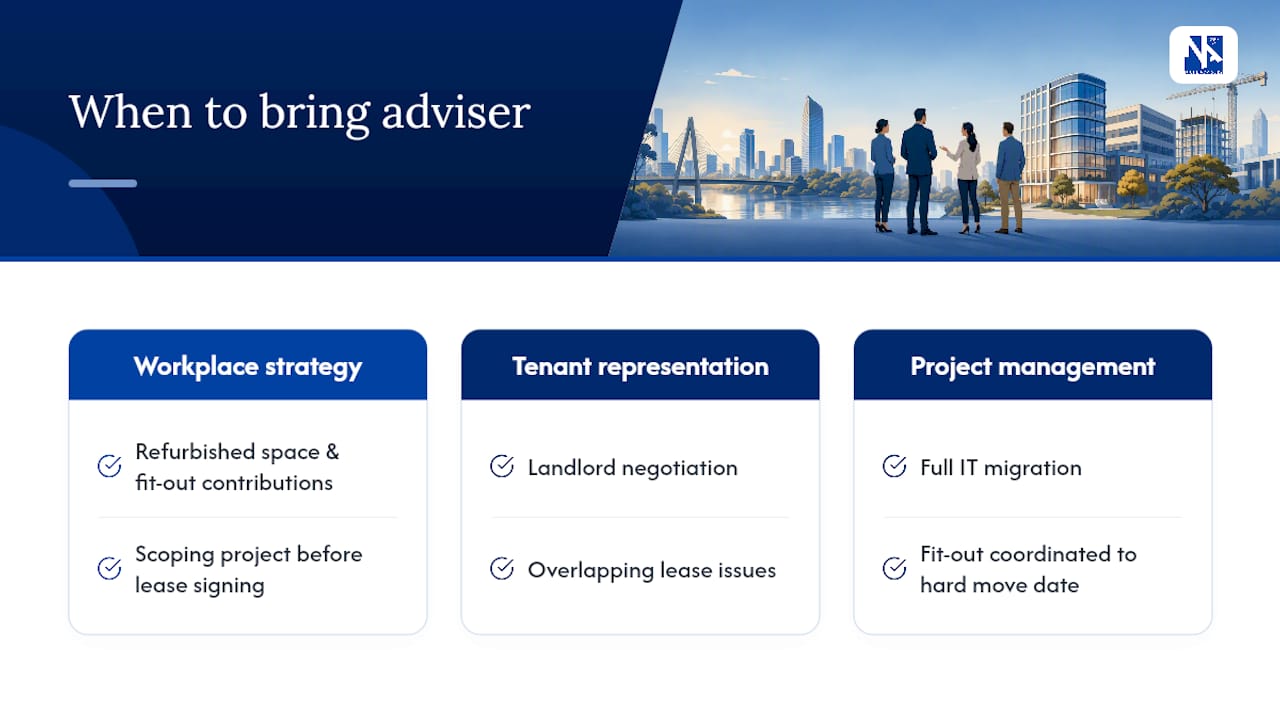
If your move touches any of that, talk to Niche Advisory about scoping the project before you sign a new lease.
Where to check the details before you commit
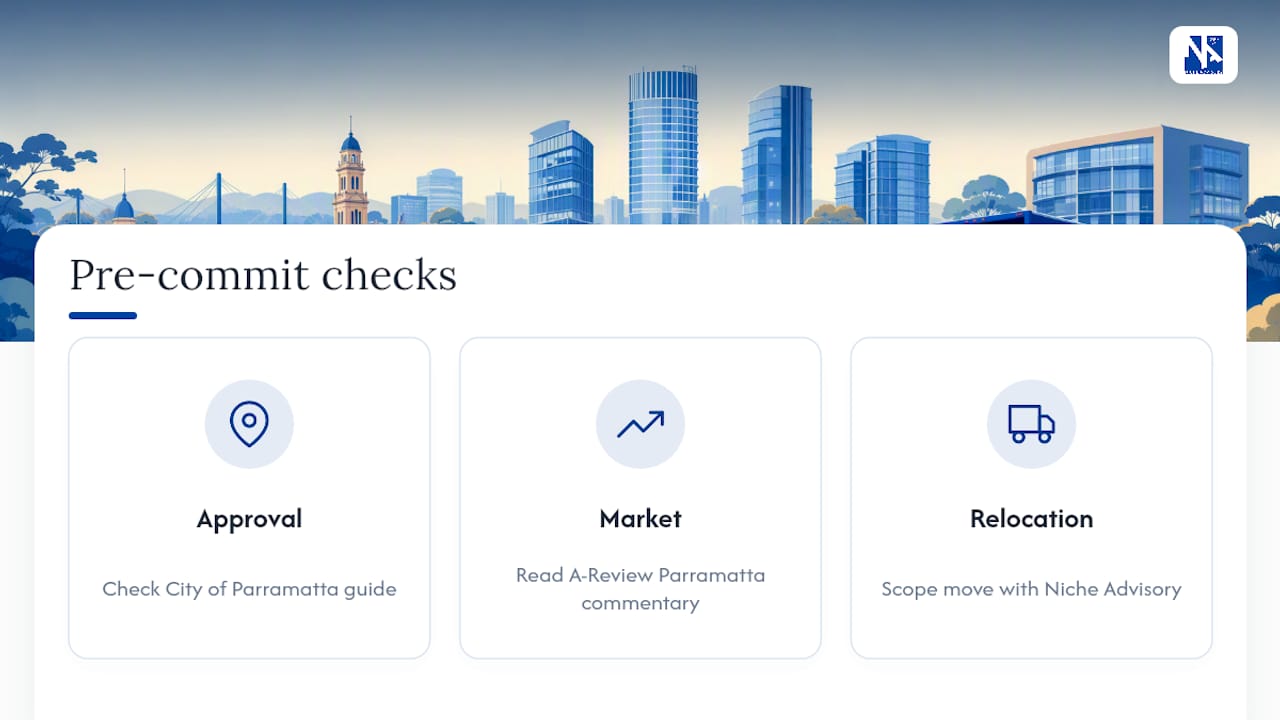
Confirm approval requirements directly with City of Parramatta’s development guide, review current market conditions through A-Review’s Parramatta office commentary, and scope your own relocation with Niche Advisory before locking in dates or suppliers.
Sources
- City of Parramatta — development and building approval guide
- A-Review: Parramatta office vacancy and market commentary
- CBD Movers: Relocate Parramatta office without disruption
- Six Brothers Removalist