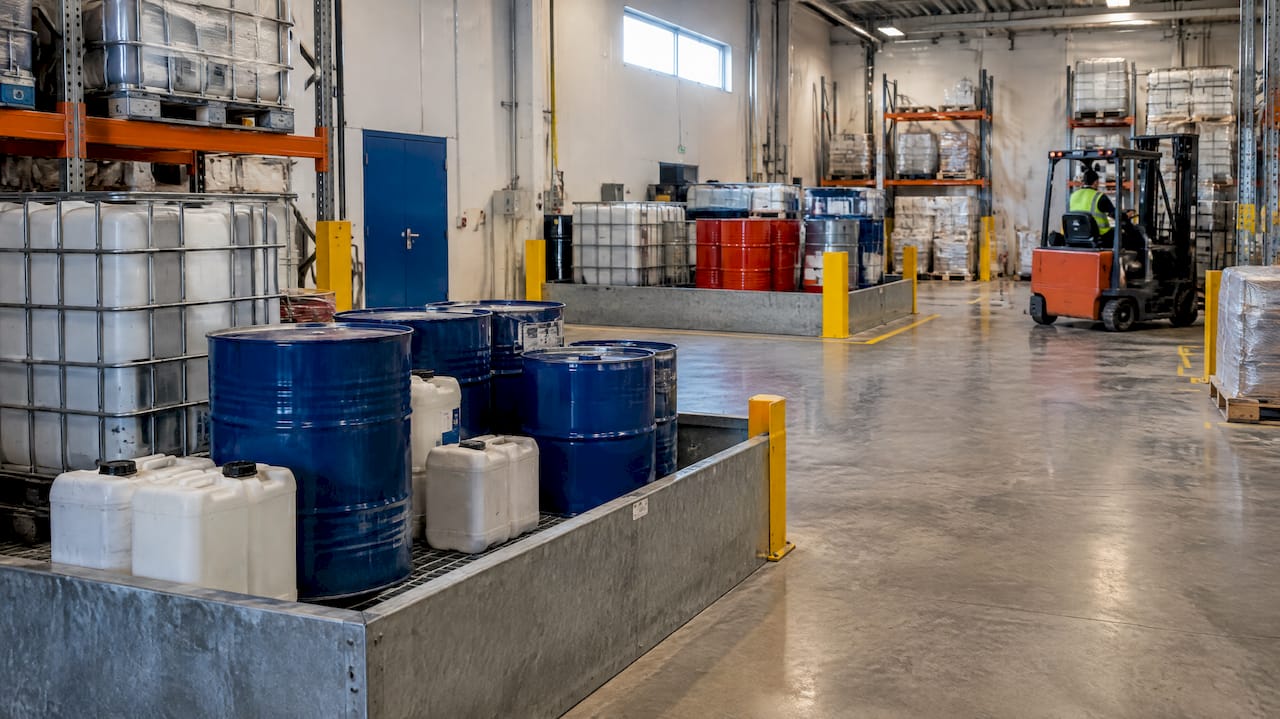
The best way to secure a favourable industrial lease is to negotiate the whole-of-lease package, not just base rent, and lock the key protections into the heads of agreement before you sign. That means securing a conditional HOA, requiring audited outgoings reconciliation, and running environmental due diligence wherever a site’s industrial history is uncertain. Get legal and financial advice before you commit to anything.
TL;DR:
- Put rent, incentives, permitted use, and renewal options in a conditional heads of agreement; landlords are reluctant to reopen agreed terms after signing.
- If site history is uncertain, budget $15,000 to $50,000 for Phase II sampling; occupiers may owe remediation costs even if they did not cause contamination.
- Require an audited annual outgoings reconciliation within 60 days of the landlord’s financial year end, plus audit rights and a process for disputed charges.
- Record the premises condition with a signed report and photographs at handover, then limit make good to fixture removal and broom clean.
- Test loading access with your actual vehicles before signing, and put dock scheduling, permitted operating hours, turning space, and road maintenance in writing.
Table of Contents
- Key lease terms tenants must understand and negotiate
- Practical negotiation plan: step by step from heads of agreement to signed lease
- Industrial due diligence: contamination, Phase I/II ESAs and negotiation levers
- Rent, outgoings and GST: how to read the numbers and protect cash flow
- Make-good, repairs and assignment: managing exit and transfer risk
- When to use expert help and what to ask your tenant adviser or lawyer
- Negotiation of access rights, including loading docks, operating hours and traffic management
- Options and negotiation around expansion rights or early termination clauses
- Insurance requirements and liability allocation specific to industrial leases
- Energy efficiency and sustainability considerations impacting lease terms
- How Niche Advisory can help negotiate better industrial leases
- FAQ
- Sources
Key lease terms tenants must understand and negotiate
An industrial lease is a bundle of risk allocations, not just a rent figure. The clauses that quietly cost (or save) the most money rarely appear in the headline terms a landlord’s agent leads with.
Lease term and options to renew set your flexibility. A shorter term with strong renewal options protects you against being locked into a site that no longer fits your operations, while a longer term can justify a bigger landlord fit-out contribution. The right length should match your fit-out payback period and broader business strategy rather than whatever the landlord proposes first.
Rent structure matters as much as the headline figure. Incentives, rent-free periods and the rent review mechanism (fixed percentage, CPI-linked, or market review) all shift the real cost of occupancy over the term. A lease with a low face rent but aggressive annual fixed increases can cost more over five years than one with a higher starting rent and CPI reviews.
Outgoings deserve the same scrutiny as rent. Ask for a detailed budget before signing, clarify what is excluded, and insist on audit rights over the landlord’s reconciliation. We cover the mechanics of this in more detail in the outgoings section below.
Several other clauses shape your operational and financial exposure:
- Permitted use: confirm the clause covers your current operations and any likely expansion, since a narrow definition can block future activities without a formal variation.
- Fit-out obligations: clarify what the landlord contributes, what handover condition looks like, and what milestones trigger payment or rent commencement.
- Repairs and maintenance: push for clear definitions of landlord versus tenant responsibility, with response timeframes for urgent repairs like roof leaks or dock door failures.
- Security: personal guarantees and bank guarantees are negotiable; aim to cap the guarantee amount and secure a reduction schedule tied to good payment history.
- Assignment and subletting: negotiate consent that “cannot be unreasonably withheld” and seek a release from ongoing guarantee obligations once a new tenant is approved.
- Make-good: push for a narrow definition (cosmetic “broom clean” condition) rather than full reinstatement to base building, particularly where you’ve made structural improvements the landlord benefits from.
Each of these clauses interacts with the others. A longer lease term might justify accepting a stricter make-good obligation in exchange for a larger fit-out contribution, for instance. Negotiating them as a package, rather than one at a time, is what the Small Business Development Corporation’s leasing guidance describes as the whole-of-lease approach: experienced negotiators prioritise the full package over the headline rent and keep their bottom line confidential so they can trade concessions for the terms that matter operationally.
Practical negotiation plan: step by step from heads of agreement to signed lease
A structured sequence prevents you from discovering a deal-breaking clause after you’ve already committed emotionally, or financially, to a site.
- Prepare your position first. Set your financial bottom line, estimate your fit-out budget, and get internal sign-off from whoever controls the capital expenditure decision before you talk to a landlord.
- Draft the heads of agreement (HOA). Record rent, incentives, term, options, permitted use and make-good intent, and make the HOA conditional on due diligence, finance approval and legal review within a set timeframe.
- Run due diligence in parallel. Commission a full lease review, check the outgoings budget against prior years, order an environmental assessment if the site has industrial history, inspect technical systems, and confirm insurance requirements.
- Set negotiation priorities. Decide what you’ll trade: a longer term for a bigger incentive, a higher rent for a shorter make-good scope, or a personal guarantee cap in exchange for accepting a standard rent review.
- Complete a pre-signing checklist. Confirm the audited outgoing reconciliation clause, landlord warranties on title and compliance, and agreed handover and practical completion dates are all reflected in the final lease, not just the HOA.
- Sign and diarise key dates. Record option exercise windows, rent review dates and insurance renewal deadlines immediately after execution.
Pro Tip: Treat the HOA as a negotiation tool, not a formality. Once signed, landlords are reluctant to reopen terms that were agreed there, so get every material point into it before moving to lease drafting.
A typical timeline for a mid-size industrial tenancy runs eight to sixteen weeks from HOA to execution, depending on how quickly environmental and technical reports come back. Your internal team, your lawyer, a technical consultant (for building and environmental checks) and a tenant adviser each have distinct roles in that window: the adviser coordinates the moving parts so legal and technical input land before the deadlines in the HOA, not after.
Keeping your bottom line confidential throughout is one of the more consistently cited tactics in tenant negotiation guidance: disclosing it early removes your ability to trade concessions like fit-out contributions or rent-free periods for terms that matter more to your operations than headline rent does.
Industrial due diligence: contamination, Phase I/II ESAs and negotiation levers
Industrial sites carry environmental risk that office or retail tenancies simply don’t, and that risk can attach to you as occupier under state contamination laws even if you didn’t cause it.
A Phase I Environmental Site Assessment (ESA) is a desktop and site-walk review: historical land use, aerial photographs, council records and pollution registers, aimed at identifying whether contamination is plausible. A Phase II ESA follows when Phase I flags a concern, and involves physical soil and groundwater sampling to confirm or rule out contamination. Structured environmental due diligence identifies these risks early enough to negotiate contract conditions and cost allocations before you’re locked in, and verifying zoning and site history independently matters because prior industrial activity can create remediation obligations that follow the occupier under state laws.
Budget for Phase II work when history is uncertain. Phase II sampling typically costs between $15,000 and $50,000, and owners or occupiers may be liable for remediation under state legislation regardless of who caused the original contamination.
Before you commit to a site, work through:
- Historical use records: check council archives and prior occupier types, especially manufacturing, fuel storage or chemical handling.
- Pollution and contaminated land registers: search the relevant state register for listed or notified sites.
- Asbestos registers: request any existing asbestos survey for pre-2004 buildings.
- Soil and groundwater risk indicators: ask whether any prior remediation orders or monitoring wells exist on site.
Where risk is unresolved, use the HOA to protect your position: make the lease conditional on a satisfactory Phase II result, require a landlord warranty that the site complies with relevant environmental standards, and specify that remediation costs and any resulting rent abatement sit with the landlord, not you.
Rent, outgoings and GST: how to read the numbers and protect cash flow
Outgoings are usually estimated at the start of the year and reconciled against actual costs afterwards, and that reconciliation is where tenants most often get an unwelcome bill. Landlords typically budget outgoings based on the prior year’s actual spend plus an allowance for expected increases, then issue a reconciliation statement once annual accounts are finalised.
Outgoings disputes are common enough to carry their own regulatory data. As of 2026, 22% of mediations handled by the Queensland Small Business Commissioner involved outgoings, which signals how often reconciliation terms are poorly drafted or poorly enforced.
GST adds another layer. Under GSTD 2000/10, outgoings reimbursed by a tenant are treated as part of the consideration for the supply of the premises, which means a reconciliation adjustment can trigger a corresponding GST adjustment note from the landlord. If you’re not expecting that note, it can throw out your quarterly BAS reconciliation.
Negotiate these protections into the lease:
- A cap on apportionable management fees, expressed as a fixed percentage of the outgoings budget.
- An annual audited reconciliation, delivered within 60 days of the landlord’s financial year-end.
- Escrow for disputed charges, so a contested item doesn’t have to be paid in full before it’s resolved.
- Clear exclusions, ruling out capital works, land tax (where state law permits exclusion) and costs benefiting other tenants.
Say your outgoings budget is estimated at $40,000 for the year but actual costs come in at $48,000: without a cap or dispute mechanism, you could face an unbudgeted $8,000 bill with no ability to query individual line items. A reconciliation clause with audit rights and a defined dispute process turns that into a manageable, checkable adjustment instead of a surprise invoice.
Make-good, repairs and assignment: managing exit and transfer risk
Make-good clauses are where lease negotiations are won or lost years after signing, because the obligation is usually defined loosely at the start and interpreted strictly at the end.
Push for a narrow make-good definition. A “broom clean” standard, covering removal of your fixtures and general cleaning, costs far less than full reinstatement to base building condition, and the Queensland Small Business Commissioner recommends limiting reinstatement to structural items only, with cosmetic obligations capped at broom-clean standard and current condition captured in a handover schedule signed by both parties. Photographing the premises at commencement, with a signed condition report, is the single most effective way to prevent a dispute about what you’re responsible for restoring.
Repairs and maintenance obligations should include defined response timeframes for urgent issues such as a failed dock leveller or a roof leak affecting stock, and a clear split between structural repairs (landlord) and operational wear items (tenant). Where make-good or handover cleaning is involved, a documented cleaning and condition scope at both commencement and exit, with clear service-level expectations, reduces the chance of a dispute over what “clean” actually means.
Assignment and subletting clauses need two specific protections: a consent mechanism that cannot be unreasonably withheld, with a defined response timeframe, and a release from your guarantee once the incoming tenant is approved. Without that release, you can remain liable for a business you’ve sold long after you’ve walked away from it.
Before exit, confirm:
- A signed handover condition report exists and matches photographic evidence from both ends of the tenancy.
- Make-good scope is documented in writing, not left to interpretation at the final walkthrough.
- Guarantee release terms are confirmed in writing before you hand over to an assignee.
When to use expert help and what to ask your tenant adviser or lawyer
Independent tenant advisers coordinate the parts of a negotiation that are easy to get wrong under time pressure: drafting the HOA, setting negotiation strategy, coordinating technical and environmental due diligence, and negotiating make-good and fit-out terms with contractors and landlords. Independent tenant advocacy commonly uncovers hidden outgoing charges and restrictive use clauses that a standard lease review misses, and can materially reduce the lifetime cost of a lease.
Legal advice becomes essential, not optional, whenever a lease involves personal guarantees, environmental indemnities, an unusual rent review mechanism, or covenants that deviate from standard market terms. A lawyer specialising in leasing will catch drafting issues a generalist might not.
Before engaging either, ask:
- What’s the fee model? Fixed fee, hourly or success-based arrangements each create different incentives.
- What outcomes have they achieved on comparable sites recently?
- What’s the scope of the engagement, and does it include technical due diligence coordination or only document review?
- Are there any conflicts of interest, including relationships with landlords or agents involved in the deal?
Pro Tip: Confirm your adviser acts exclusively for tenants. An adviser who also represents landlords in other deals has a structural conflict that can shape the advice you receive, even unintentionally.
We coordinate HOA drafting, technical due diligence and make-good negotiation as one continuous process rather than handing a reader a generic checklist and leaving them to coordinate it themselves.
Negotiation of access rights, including loading docks, operating hours and traffic management
Access provisions get far less attention than rent during negotiation, yet they can determine whether a site actually works for your operations. Confirm exclusive or shared use of loading docks in writing, including how shared access is scheduled if multiple tenants use the same facility.
Operating hours matter where council conditions or body corporate rules restrict truck movements, forklift noise or loading activity outside certain windows. If your business runs early starts or late deliveries, verify the site’s permitted hours before signing, not after your first delivery is knocked back by a site manager.
Traffic management and hardstand access also deserve a specific clause where your operation depends on B-double or semi-trailer access. Confirm turning circles, awning clearance heights and any shared driveway arrangements with neighbouring tenants, and get commitments on maintenance of access roads and hardstand areas in writing. A site that looks adequate on a walk-through can still fail to accommodate your actual vehicle fleet or delivery schedule once operations begin, so testing access with your real vehicles before signing is worth the time it takes.

Options and negotiation around expansion rights or early termination clauses
Growth and contraction both need contractual room, and most standard leases are drafted with neither in mind. An expansion option, giving you first right of refusal over adjoining space as it becomes available, protects you from having to relocate entirely if your operation outgrows the current footprint.
Early termination (or “break”) clauses work in the opposite direction, letting you exit before the full term if your business changes direction, typically in exchange for a break fee or forfeiture of any remaining incentive. Negotiating a break clause with a defined, capped fee, rather than an open-ended “reasonable costs” formula, gives you a known exit cost instead of an unpredictable one.
Both clauses are easier to secure at the HOA stage than after the lease is drafted, because they affect the landlord’s own planning for the building. If expansion space isn’t available now but might be later, ask for a right of first refusal rather than a hard option, since it costs the landlord less to grant and still protects your position. Where your business model carries genuine uncertainty, such as a new product line that could scale quickly or fail, a break clause is worth more than a marginally lower rent.
Insurance requirements and liability allocation specific to industrial leases
Industrial leases typically require the tenant to hold public liability insurance at a minimum sum insured, along with insurance over fit-out and contents, while the landlord insures the base building structure. Confirm the specific minimum liability amount required in the lease and check it against your actual risk profile, particularly if your operation involves heavy machinery, hazardous materials storage or significant foot traffic from customers or couriers.
Liability allocation should be explicit about who bears risk for damage caused by forklifts, racking collapse, or spills affecting shared areas like loading docks. A lease silent on this detail defaults to general negligence principles, which can leave you disputing liability after an incident rather than before one.
Check also whether the landlord’s building insurance policy has any exclusions that could affect your operations, for instance around certain stored goods or activities the insurer classifies as higher risk. Where your business involves anything outside a standard warehouse use (cold storage, flammable goods, heavy manufacturing), confirm with both your own broker and the landlord’s insurer that the proposed use is covered before you sign, not after a claim is declined.
Energy efficiency and sustainability considerations impacting lease terms
Energy efficiency clauses are becoming a bigger part of industrial lease negotiations as electricity costs rise and more landlords install solar, battery or efficient lighting systems as part of base building upgrades. Confirm who pays for and benefits from any embedded network arrangement, since some embedded electricity networks charge tenants above standard retail rates without clear disclosure.
Ask whether the building has any existing sustainability features such as rooftop solar, LED lighting or improved insulation, and whether those translate into lower outgoings or just lower landlord emissions reporting. Where a landlord is planning upgrades during your tenancy, negotiate who bears any disruption cost and whether efficiency gains are shared through reduced outgoings rather than captured entirely by the landlord.
For tenants with their own sustainability commitments or reporting obligations to a parent company or major customer, confirm whether the lease allows you to install your own solar, EV charging infrastructure or efficient equipment without requiring separate landlord consent for every item. Building this flexibility into the permitted works clause upfront avoids a slow, case-by-case approval process every time you want to improve the site’s efficiency.
How Niche Advisory can help negotiate better industrial leases
We act exclusively for tenants and owner-occupiers, never landlords, which means every recommendation we make is weighed against your operational and financial position, not a landlord’s.
Our tenant advocacy work covers the full sequence outlined above:
- Heads of agreement drafting and negotiation strategy tailored to your fit-out and growth timeline.
- Coordination of environmental, technical and legal due diligence with specialist consultants.
- Make-good negotiation and project and construction management through fit-out and handover.
If you’re approaching a renewal, relocation or new industrial lease, our tenant representation plan sets out a structured nine to twelve month engagement built around the same priorities in this guide. Get in touch with our team to talk through your site and timeline.
This article is general information, not a substitute for advice from a qualified lawyer. Consult a qualified legal professional about your own circumstances before acting on anything here.
FAQ
What is the 70/30 rule in negotiation?
The 70/30 rule is a general negotiation principle suggesting you spend roughly 70% of your time listening and asking questions, and 30% talking, so you understand the other party’s position before presenting your own. It’s not specific to leasing, but it applies well to lease negotiations where understanding a landlord’s vacancy pressure or portfolio goals can reveal room to trade on term, incentives or make-good scope.
How do I negotiate a new commercial lease?
Start by prioritising the whole-of-lease package (term, incentives, outgoings, make-good and assignment rights) over the headline rent figure alone, as recommended in tenant negotiation guidance. Record agreed terms in a conditional heads of agreement, complete due diligence before the lease is finalised, and get legal review before signing.
What are the best tactics for industrial lease negotiation?
Keep your financial bottom line confidential and trade concessions, such as accepting a longer term in exchange for a larger fit-out contribution, rather than negotiating each clause in isolation. For industrial sites specifically, use environmental due diligence findings as a negotiation lever, making the lease conditional on satisfactory results and shifting remediation risk to the landlord where history is uncertain.
What are the four golden rules of negotiation?
Common formulations of negotiation “golden rules” include preparing thoroughly before you negotiate, separating the people from the problem, focusing on interests rather than fixed positions, and keeping your own walk-away point confidential. Definitions vary across negotiation frameworks, but these principles consistently support the whole-of-lease approach recommended for industrial tenants.
Do I need a lawyer to negotiate an industrial lease?
Legal advice becomes essential where a lease involves personal guarantees, environmental indemnities, complex rent review mechanisms or non-standard covenants, since these clauses carry long-term financial exposure if drafted poorly. Even for more straightforward leases, having a lawyer review the final document against the heads of agreement helps confirm every negotiated point was actually captured.
Sources
Guidance in this article draws on ATO GST rules for outgoings, Queensland Small Business Commissioner leasing resources, and published environmental due diligence standards for industrial sites.
- GSTD 2000/10: GST: are outgoings payable by a tenant part of the consideration for the supply of premises?
- Tips when entering a commercial lease | Queensland Small Business Commissioner
- Negotiating a lease | SBDC
- Environmental due diligence before buying industrial property: a guide for investors | Nova Group Pacific
- Environmental site assessments | OT Environmental