
A phased move management checklist works because one person owns it. Appoint a single move coordinator, build a master schedule with dated owners for every task, and order your long-lead items (internet, fit-out, telecoms) the day you sign. Get those three things right and the move stays on schedule, downtime stays contained, and costs stay predictable.
TL;DR:
- Locking in internet, telecoms, and fit-out milestones early minimizes delays and ensures all installations are ready before move day.
- Appointing a single move coordinator with clear decision authority reduces delays caused by multiple departments and streamlines communication.
- Building contingency into schedules, budgets, and staffing plans prevents common disruptions like delays, overspending, or personnel absence.
- Conducting a comprehensive dry run of IT and telecoms at the new site before move day helps identify and fix issues while it remains inexpensive.
- Starting disposal and donation processes three months in advance avoids last-minute costs and compliance issues associated with reacting late.
Table of Contents
- What goes into a move management checklist for the planning phase?
- How do you prepare inventory and suppliers before packing starts?
- What should the move-day playbook cover?
- How do you settle into a new workspace after the move?
- What does the make-good and lease-end checklist involve?
- How does Niche Advisory approach move management?
- How do you manage risk and build in contingency?
- What’s the checklist for disposing or donating unwanted items?
- What documentation and legal steps matter most during a move?
- How do you support staff through relocation and change?
- How do you track budget and costs throughout a move?
- Where Niche Advisory fits into your move
- Sources
What goes into a move management checklist for the planning phase?
Everything that happens in the six to twelve months before a lease change determines whether the move day itself is calm or chaotic. This is where most of the actual risk in a relocation gets created or removed, long before a single box gets packed.
Start by naming a move coordinator, not a committee. A single named coordinator with real decision authority reduces the delays that come from HR, IT, and facilities each pulling in a different direction, according to Allied’s guide to business relocations. That person needs a contact list, a mandate to make calls without waiting for sign-off on every detail, and a direct line to whoever holds the budget.
Next, pull out the current lease and check three things: notice periods, make-good exposure, and whether you’ll be paying rent on two premises at once. Overlap rent is one of the most underestimated costs in a relocation, and it should be sized around what your fit-out and IT testing actually need, not around a desire to shave a few weeks off the bill, as Complete Office Fitouts points out. Most well-run office moves build in a contingency of a contingency in the budget to cover unexpected costs and overlap rent (https://upmove.com.au/post/office-relocation-guide-australia) on top of the base budget to absorb costs like this.
Here’s the planning sequence that actually holds up in practice:
- Appoint the move coordinator and confirm their decision authority in writing.
- Set the move date and work backwards to identify every deadline that depends on it.
- Review the current lease for notice periods, make-good clauses and overlap rent exposure.
- Order internet and telecoms immediately, given installations commonly take several weeks to a few months (https://www.elia.io/blog/office-move-checklist).
- Build a master schedule that names an owner, a due date and a status for every task.
- Open communication channels with HR, IT, finance and facilities before rumours start.
Pro Tip: Put the master schedule in a shared, editable tracker rather than a static document. A named owner and a live status column stop tasks quietly slipping through the cracks, which is one of the most common reasons office relocation timelines blow out.
How do you prepare inventory and suppliers before packing starts?
Three to six months out, planning becomes procurement. This is the phase where you turn a schedule into contracts, quotes and a physical inventory that’s actually ready to move.
Walk every room or department and audit what’s there. Every desk, cabinet, server rack and meeting room screen gets tagged with one of four labels: move, sell, dispose, or store. This single decision, made early, prevents a mad scramble in the final weeks when someone realises half the storage cupboard hasn’t been sorted.
- Get written quotes from at least two removalists and IT contractors, and compare scope, not just price.
- Verify each mover holds a valid certificate of insurance before signing anything.
- Schedule e-waste disposal and donation pickups mid-phase, since leaving disposal to the last minute creates avoidable compliance headaches and rush fees.
- Finalise your seating plan and build a labelling system that ties every box to a specific desk or room at the new site.
- Lock in fit-out milestones and check they align with your move date, not the other way around.
- Communicate the plan, the timeline and individual responsibilities to every staff member, not just team leads.
Fit-out timing deserves particular attention here. In a typical capital city market, landlord approvals take two to four weeks, construction on a mid-sized fit-out runs four to six weeks, and IT commissioning needs another one to two weeks on top. Stack those end to end and a “quick” fit-out easily consumes two months before anyone moves a chair.
What should the move-day playbook cover?
By the one to two month mark, planning shifts from documents to dress rehearsals. This is where a move management checklist earns its keep, because the changeover week is the highest-risk period for operational disruption, and running an IT dry run before move day is the single most effective way to catch problems while they’re still cheap to fix.
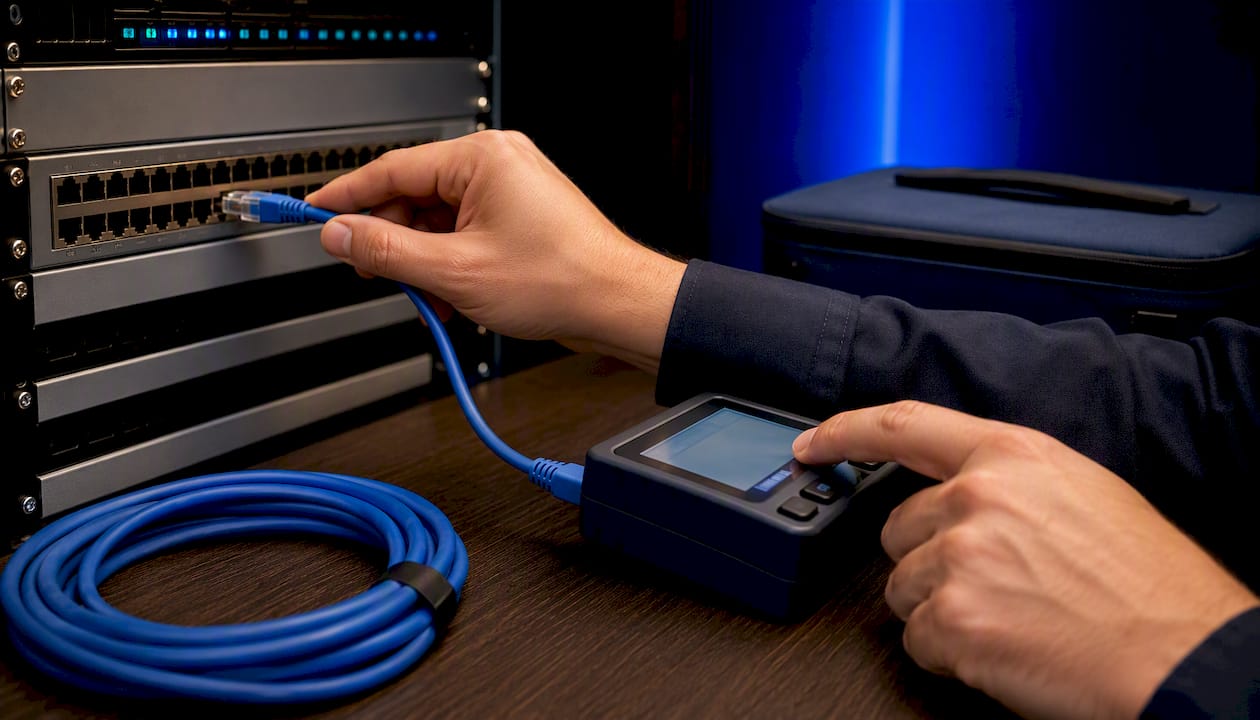
Test phone routing and video conferencing at the new site well before the move, not on the morning it happens. Finalise your packing sequence room by room, confirm every box carries a label that maps to its destination desk, and assign a named owner to loading at both ends.
Here’s the sequence that keeps move day itself short and contained:
- Confirm mover arrival time, building access, lift bookings and parking or unloading logistics with the building manager.
- Send IT on site first at the new location, ahead of furniture and staff.
- Have the move coordinator physically present for the entire changeover, not just checking in by phone.
- Sign off on inventory as it’s delivered, checking it against the packing list before the truck leaves.
- Confirm internet is live, phones are routing correctly, printers are networked and fire safety checks are complete before staff arrive.
Roughly half of all move-related downtime traces back to IT and telecoms issues that a dry run would have caught. Treat the dry run as non-negotiable, not optional polish.
How do you settle into a new workspace after the move?
The first ninety days after a move decide whether the new space actually works or just gets tolerated. Stagger unpacking so essentials go first: workstations, phones, and anything a team needs to be operational on day one. Full unpacking of archives and non-critical storage can wait a week without hurting anyone.
Open a single help channel, whether that’s a shared inbox, chat channel or physical help desk, and appoint one person to triage what comes in. Run short, practical training sessions in the first days on desk booking systems, AV equipment and any new security or access procedures. People forget instructions given during the chaos of move week, so repeat them once things settle.
- Collect informal staff feedback within the first week while impressions are fresh.
- Review desk and meeting room utilisation at the 30 and 90 day marks to see if the space matches how people actually work.
- Document lessons learned while the move is still fresh, not months later when details blur.
- Finalise handover documentation for facilities and IT so ongoing maintenance has a clear reference point.
Pro Tip: Schedule the 30-day utilisation review as a fixed calendar appointment before the move even happens. Post-move reviews are the first thing to get deprioritised once the office feels “settled”, even though that’s exactly when the data is most useful.
What does the make-good and lease-end checklist involve?
Make-good obligations are where relocations turn into disputes, and the fix starts before you’ve even moved out of the old site. Get an entry condition report done now, with dated, timestamped photos of every room, fixture and finish. This document becomes your evidence base if a landlord later claims damage that predates your tenancy, and a properly prepared entry report is consistently the strongest defence tenants have.
- Store the entry condition report somewhere permanent, not on a phone that gets replaced in two years.
- Read the make-good clause in your lease carefully. Vague wording is the single biggest driver of disputes down the track, since ambiguous drafting leaves both sides arguing over what “as new” actually means.
- Weigh up your three real options: carry out the physical works yourself, negotiate a cash settlement with the landlord, or vary the lease terms entirely.
- Schedule any make-good works to finish within your handback window so you don’t end up paying overlap rent on a site you’ve already left.
- If you settle for cash, get it documented with a deed of release so the landlord can’t reopen the claim later.
For a deeper look at how make-good obligations and negotiations typically play out, and where tenants tend to lose leverage, it’s worth reading the clause in your lease alongside a specialist before you assume you know what it requires.
How does Niche Advisory approach move management?
Niche Advisory has run relocation and make-good engagements for corporate tenants for over 12 years, built around one principle: a single point of contact who owns the whole program, not a handoff between separate teams for design, project management and lease negotiation.
That means fit-out sequencing, IT commissioning and lease timing get planned together from day one, not reconciled after the fact when dates clash.
- One coordinator manages workplace strategy, lease negotiation and project delivery as a single engagement.
- Fit-out milestones and IT commissioning are scheduled against the same master timeline, not separate ones.
- A concise checklist template, adapted from real engagements, is available for readers who want a starting point they can edit for their own move.
Readers weighing up a combined approach can see how bundling relocation and make-good delivery actually reduces the coordination overhead a DIY move usually carries.
How do you manage risk and build in contingency?
A move management checklist without a risk plan is just a wish list. The most common failure points are predictable: a mover cancels or is short-staffed, a landlord delays access to the new site, IT connectivity slips past its install date, or a key staff member responsible for a task goes on leave at the worst possible moment.
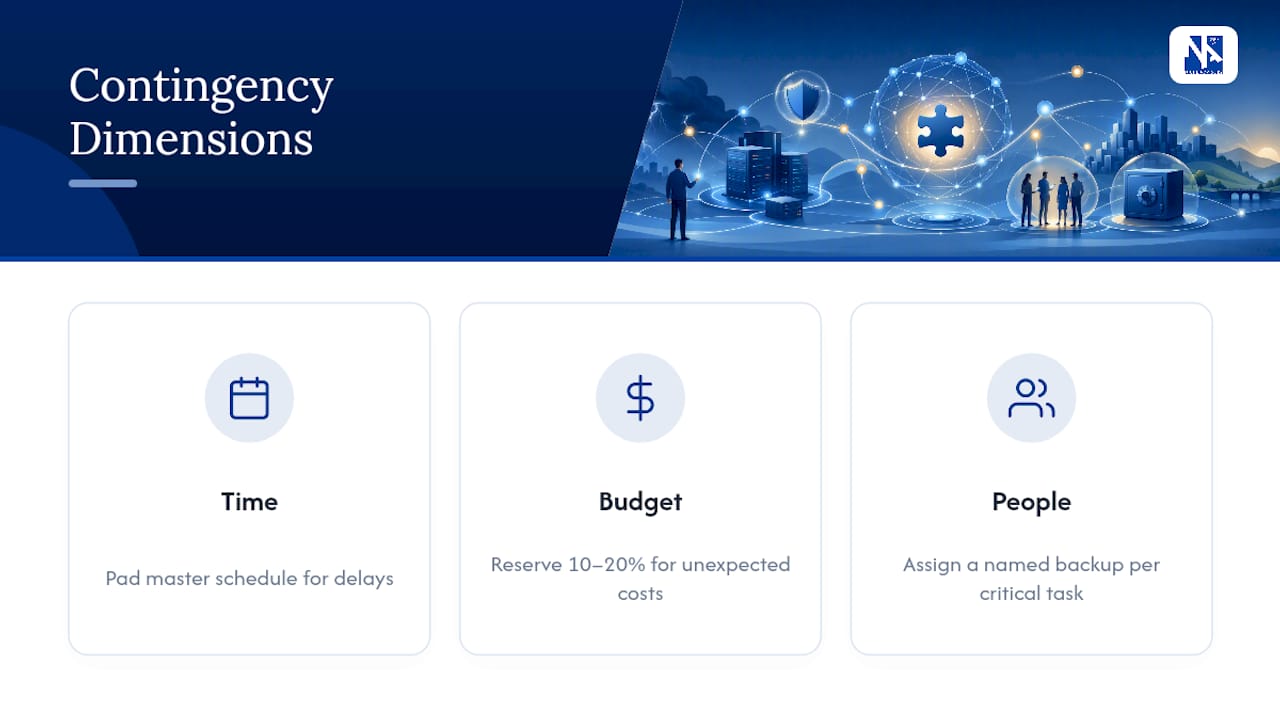
Build contingency into three places at once, not just the budget. Time contingency means padding your master schedule so a two-week IT delay doesn’t collapse into a missed move date. Budget contingency, at the 10 to 20 percent range most relocations use, covers unplanned costs like extra overlap rent or last-minute contractor fees. People contingency means every critical task has a named backup, not just a named owner.
Write down your top five risks explicitly, rate each by likelihood and impact, and assign a mitigation action to each one before the move starts. If the internet install slips, what’s the fallback: a temporary mobile hotspot solution, or a delayed go-live for non-essential systems? If the removalist cancels, do you have a second quote already on file? A risk register doesn’t need to be complicated. It needs to exist and get reviewed weekly by the move coordinator, not filed away and forgotten after the planning phase.
What’s the checklist for disposing or donating unwanted items?
Every relocation surfaces furniture, IT equipment and stock that isn’t coming to the new site. Handled reactively, this becomes a last-week scramble with rush fees attached. Handled as part of the mid-phase checklist, it’s just another line item.
Start with the tagging exercise from the inventory audit: everything marked “dispose” or “sell” gets its own action plan. Old IT equipment, monitors, and cabling need e-waste-compliant disposal, not a general skip bin, since electronic waste is regulated separately from general commercial waste in most jurisdictions. Line up a licensed e-waste contractor during the preparation phase, not the week before the move.
- Separate items into four disposal streams: donation, resale, recycling and general waste.
- Contact local charities or furniture reuse schemes early. They often need weeks of lead time to arrange pickup of larger items like desks and cabinets.
- Get a written quote from a liquidation or resale service if you have quality furniture or equipment in volume.
- Confirm e-waste contractors hold the right licensing for the equipment being disposed of.
- Photograph anything of value before it leaves the building, for both insurance and asset-register purposes.
Scheduling these pickups mid-phase, rather than in the final fortnight, avoids the compliance and cost problems that come with rushed, last-minute disposal.
What documentation and legal steps matter most during a move?
A move management checklist is also a paper trail, and the paperwork that gets skipped is usually the paperwork that causes a dispute later. Beyond the entry condition report covered in the make-good section, several other documents deserve a dedicated file from day one.
Keep signed copies of every mover and contractor agreement, along with their certificates of insurance and public liability cover. If something is damaged in transit, you’ll need this to make a claim, and chasing it down after the fact from a contractor who’s moved on to the next job is far harder than filing it upfront.
Retain a copy of the new lease with key dates, break clauses and any special conditions clearly flagged for whoever manages the property relationship going forward. If any verbal agreements were reached with the landlord, such as an extended handover or waived overlap rent, get them confirmed in writing, even a simple email exchange. A verbal promise carries no weight if a dispute reaches a tribunal or court.
Finally, update your business registration, insurance policies and any regulatory notifications tied to your physical address. This is easy to forget once the move itself is done, but an outdated address on an insurance policy can complicate a claim at exactly the moment you need it to work smoothly.
How do you support staff through relocation and change?
The practical checklist gets most of the attention, but the human side of a move determines how quickly a team actually gets back to full productivity. Staff communication is one of the highest-stakes parts of the entire process, and communicating the reasons behind a move early helps cut down the anxiety and speculation that otherwise fills the vacuum, according to Allied’s relocation guide.
Tell staff why the move is happening, not just when. A relocation driven by growth reads very differently to one driven by cost-cutting, and people fill in the blanks with worst-case assumptions if you don’t.
Give people practical, personal information as early as possible: new commute distances, parking availability, nearby amenities, and any change to desk allocation or hybrid work arrangements. For staff whose commute changes significantly, some transitional support, even something as simple as a public transport guide or a temporary parking allowance, goes a long way toward easing resistance.
Run a short session before the move explaining what to expect on the day itself: where to go, what to bring, and who to contact with questions. After the move, keep a visible feedback channel open for at least the first month, and treat early complaints as data rather than noise. A cluster of feedback about noise, temperature or desk shortage in week one is usually a sign the space needs a genuine fix, not just time to “settle in”.
How do you track budget and costs throughout a move?
Move budgets rarely blow out because of one big surprise. They blow out because of a dozen small ones that never got tracked against a baseline. Set your budget during the planning phase with clear categories: removalist and packing costs, IT and telecoms, fit-out and construction, overlap rent, contingency, and disposal or make-good costs.
Track actual spend against each category weekly, not monthly, once the move enters its active phase. A weekly cadence catches overspend while there’s still time to adjust, whereas a monthly review often means the money’s already gone by the time anyone notices the trend.
Keep contingency separate from the working budget so it isn’t quietly absorbed into day-to-day spending before you actually need it for the unexpected cost that inevitably shows up. Overlap rent deserves its own line item rather than getting buried in “miscellaneous”, since it’s one of the costs most likely to run longer than planned if fit-out or IT commissioning slips.
Finally, reconcile the final budget against the original estimate once the move is complete, and keep that reconciliation on file. It becomes the single most useful document for planning the next relocation, whenever that turns out to be.
Where Niche Advisory fits into your move
Running a relocation checklist yourself is entirely doable, but it asks one person to juggle lease negotiation, fit-out sequencing, IT timing and staff communication at the same time, often on top of their regular job. Niche Advisory exists to take that coordination role off your plate rather than adding another vendor to manage.
The firm’s relocation advisory work covers the same ground this checklist has walked through: move coordination, make-good negotiation, and fit-out project management, delivered as one engagement rather than three separate contracts you have to stitch together yourself. A typical engagement starts with a review of your current lease and business requirements, moves into space search or fit-out planning, and runs through to project delivery and handover, with one point of contact the whole way.
If your move involves a lease end, a fit-out, or both, it’s worth seeing how the relocation, advisory and project management process actually works before you commit resources to running it in-house. You can start with a straightforward first step: reach out through Niche Advisory’s site to talk through your timeline and get a sense of what a managed engagement would look like for your specific move.
Sources
- Complete Office Fitouts: How to plan a smooth office relocation and fit-out
- QSBC: Make-good factsheet
- Allied: Guide to business relocations
- Elia: Office move checklist