A sustainable office fitout can help reduce lifecycle carbon and waste, while design choices such as natural light and biophilic elements may support wellbeing. Start with three moves: design for reuse and reconfiguration, specify reused and durable materials before new ones, and lower energy demand through lighting and services. Measure the result against NABERS tenancy ratings and the Green Star Fitouts framework, and write both into your brief.
TL;DR:
- Reallocate surplus furniture through an internal claim list before buying; NSW reuse initiatives saved about $1.3 million and avoided 100 tonnes of landfill since 2023.
- Commercial fitouts can account for roughly 32% of lifecycle carbon and generate over 360 tonnes of waste per fitout; set diversion plans before work starts.
- Bring services engineers in before layouts are fixed; use zoned LED lights with occupancy and daylight sensors, then track energy performance through NABERS.
- Schedule a post occupancy evaluation before handover, compare energy and waste with brief targets, and collect a baseline to prove improvement.
Table of Contents
- What should you put in the brief on day one?
- How do you cut embodied carbon through materials and furniture?
- Which energy and lighting choices lower running costs?
- How do you avoid the waste traps in a strip-out?
- Can sustainable choices also make people healthier and more productive?
- Which standards should you build your targets on?
- How do you sequence sustainable choices around budget and schedule?
- What should you ask a fitout supplier before you appoint them?
- What can you do about water efficiency in the fitout?
- How do you bring people along during a sustainable fitout?
- How do you measure whether the fitout delivered?
- How can we help you deliver a sustainable fitout?
- FAQ
- Sources
What should you put in the brief on day one?
The brief is where a sustainable fitout is won or lost. Copy the actions below into your briefing and procurement documents so every supplier prices the same expectations.
- Reuse or refurbish existing furniture first, and list surplus items for internal claim before any purchase.
- Specify modular, demountable partitions and fitout elements.
- Require recycled or recyclable content and design for disassembly in every specification.
- Set energy and lighting targets, and plan monitoring against NABERS where feasible.
- Design waste streams and bin infrastructure for diversion during construction and operation.
- Add simple biophilic elements and limit products that emit volatile organic compounds (VOCs).
- Include a materials register and take-back plans in contracts.
- Mandate a sustainability brief in procurement documents, so it binds every tenderer.
How do you cut embodied carbon through materials and furniture?
Work down a hierarchy. Reuse what you already own, refurbish what is nearly right, and buy new only when the product carries recycled, reusable or recyclable content. Queensland government guidance sets out exactly this order, and it translates well to private tenancies.
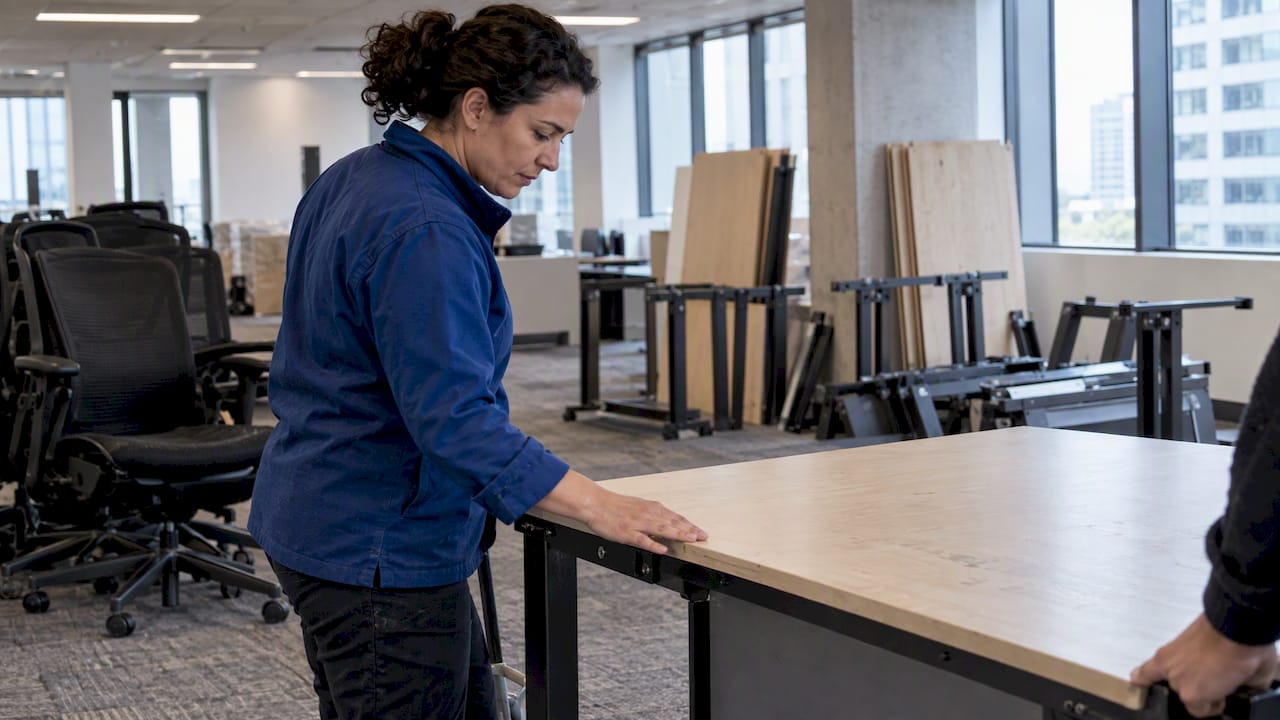
Government programs show what reuse delivers at scale. NSW reuse initiatives reported saving about $1.3 million and avoiding 100 tonnes of landfill since 2023 by reallocating surplus furniture and equipment through an online marketplace. You can copy the idea inside a single company by running an internal claim list across floors or sites.
- Choose durable finishes and flooring designed for longevity, as we explain in our guide to choosing floor finishes.
- Prefer low-VOC paints and adhesives.
- Favour products engineered for disassembly and later reconfiguration.
- Add contract clauses for material declarations and end-of-life handling.
Pro Tip: Ask every supplier for a take-back or resale option in writing before you award the contract, because it is far harder to negotiate once the product is on site.
Which energy and lighting choices lower running costs?
Lighting and services decide your operating energy for the next lease term, so settle them early.
- Plan the floor around daylight and perimeter access, so desks sit where light reaches and fewer fittings are needed.
- Specify zoned LED lighting with presence and daylight sensors, so lights only run where people are.
- Bring building services engineers in during design, because partition layouts change heating and cooling loads.
- Consider tenancy-level renewables or GreenPower for the energy you do use.
- Plan to monitor performance after move-in against NABERS, using the steps in our NABERS office rating guide.
The Green Building Council of Australia advises building sustainability into the earliest design phase, when teams can still influence energy demand, material choices and waste systems. Making sustainability decisions early gives teams more opportunity to influence energy demand, material choices and waste systems.
How do you avoid the waste traps in a strip-out?
Conventional fitouts are heavy hitters. One study found commercial fitouts can account for roughly 32% of a building’s lifecycle carbon emissions and can generate more than 360 tonnes of waste per office fitout.
Roughly 32% of lifecycle carbon can sit in fitouts. Designing for reuse can help reduce the need for repeated strip-outs.
- Design for adaptability and disassembly, so components stay in use through the next reconfiguration.
- Set up separate waste streams and well-signposted bin infrastructure, as the NSW EPA better practice guidelines recommend, including a plan for bulky and special waste.
- Agree construction and demolition reporting and diversion targets before work starts.
- Keep a materials register and plan reuse or redistribution before anything goes to disposal.
Our write-up on minimising fitout waste covers the practical tactics in more detail.
Can sustainable choices also make people healthier and more productive?
Yes, and several of the cheapest moves do both. Maximise natural light and views by planning workstations around the perimeter. Add plants or low-maintenance planters. Specify low-VOC paints and cleaning products to protect indoor air quality.
The evidence supports the effort. Research on biophilic design links natural elements and light with better staff wellbeing and productivity, and Harvard Business Review describes natural light as an effective, low-cost perk. That matters when you need to justify a fitout budget to people who care more about retention than carbon. If you also manage cleaning, a sustainable office cleaning guide shows how low-impact regimes protect the indoor environment you have just built.
Which standards should you build your targets on?
Use recognised tools so your targets are measurable and your suppliers know what evidence to produce.
- NABERS tenancy indoor environment: lets tenants measure and improve fitout performance, covering design and materials, lighting, noise and in some cases indoor air quality, and NABERS also offers waste and energy ratings.
- Green Star Fitouts: demonstration projects show that modular approaches like Forever Fitout avoid repeated strip-outs and enable reconfiguration across tenancies.
- Guide to Circularity in Office Fitouts: emphasises designing spaces to stay in use longer and to be reconfigured without a full strip-out.
- Government reuse marketplaces: practical routes for moving surplus furniture, described under NSW Choose Circular.
Set measurable targets in the brief and require waste and diversion evidence throughout delivery, not only at handover.
How do you sequence sustainable choices around budget and schedule?
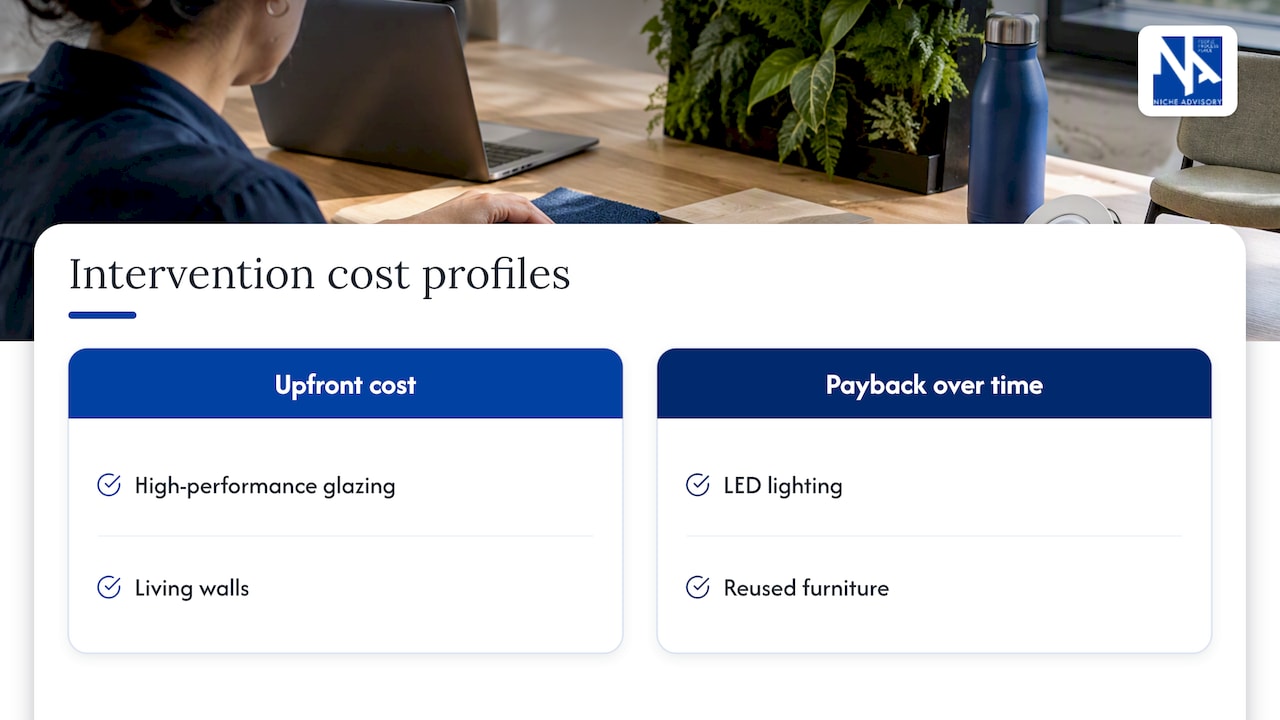
Some interventions add upfront cost, such as high-performance glazing or living walls. Others pay back over time, such as LED lighting and reused furniture. Sort your wish list into those two groups before design starts, so you are not trading away the savings for the showpieces.
Sequence matters as much as selection: brief, design, procurement, then staged delivery. Settling sustainability in the brief avoids rework and a second strip-out. Our guide to three early fitout moves explains how early decisions prevent delays, and our fitout cost benchmarks help you test the budget against real numbers.
Reuse can also reduce procurement spend. A tenancy designed to be reconfigured may be easier to hand back, but check your lease obligations. Raise this early with your landlord’s representatives, because make-good obligations shape what you can reuse.
What should you ask a fitout supplier before you appoint them?
Use these questions to test whether a supplier can deliver sustainability, not just promise it.
- Can you show project examples with circular outcomes and reuse statistics?
- Will you provide a materials register and a waste diversion plan for this project?
- What evidence do you have of NABERS or Green Star experience?
- Can you price alternate sustainability options, with timeline impacts?
- Which clients can we call as references for similar work?
How the work is procured also affects what you can control, and our comparison of design and construct versus design and tender is worth reading before you choose.
What can you do about water efficiency in the fitout?
Water is easy to overlook, yet fitout choices can shape how it is used. Amenities, kitchens and breakout areas are practical places to consider water-efficient fixtures.
Specify efficient taps, flow restrictors, dual-flush or low-flush toilets and waterless or low-flow urinals in the brief, and ask suppliers to state the water rating of each fixture. Where the building supports it, sensor taps in high-traffic amenities help stop taps being left running. In kitchens, choose efficient dishwashers and boiling-water units, and think about whether you need a full kitchen at all.
Check what the base building already provides. Check with the landlord about the main plant, metering and any rainwater or recycled water systems, since your options depend on what the building allows. Ask early whether tenancy-level sub-metering is possible, because you cannot manage what you cannot see.
Planting adds a water demand of its own. If you introduce planters or living elements, choose low-maintenance species and self-watering containers so the biophilic benefits do not create a hidden water and maintenance burden. Include fixture schedules in your materials register, so facilities teams can replace parts like for like when something fails.
How do you bring people along during a sustainable fitout?
Sustainable fitouts ask people to change habits, share space differently and sometimes give up familiar furniture. Without engagement, even a well-designed space gets worked around. Identify your stakeholders early: executives who approve the budget, facilities and IT teams who run the space, the landlord’s representatives, and the staff who will use it every day.
Explain the reasons in plain terms. Tell people why existing furniture is being reused, what the waste targets are, and what they will gain, such as better light, cleaner air and a more flexible floor. Involve a few representatives from each team in design reviews, and show them samples and layouts before decisions are locked. Early involvement tends to turn objections into suggestions.
Plan the move itself. Set out new waste and recycling arrangements, desk booking or neighbourhood rules, and any changes to cleaning or maintenance routines, and communicate them before day one rather than after. Appoint champions on each floor who can answer questions and report problems quickly.
Finally, link the change to your wider strategy. Our work on workplace strategy shows how fitout decisions connect to how people actually work, and our employee experience guide covers the human side in more depth.
How do you measure whether the fitout delivered?
A post-occupancy evaluation checks whether the space performs the way the design promised. Schedule it before you finish the project, because budgets and attention disappear once everyone has moved in.
Start with the targets you wrote into the brief. Compare actual energy use, waste diversion and indoor environment results against them. NABERS ratings give you a recognised benchmark for tenancy performance, and the waste records from construction and operation show whether diversion targets held up in practice.
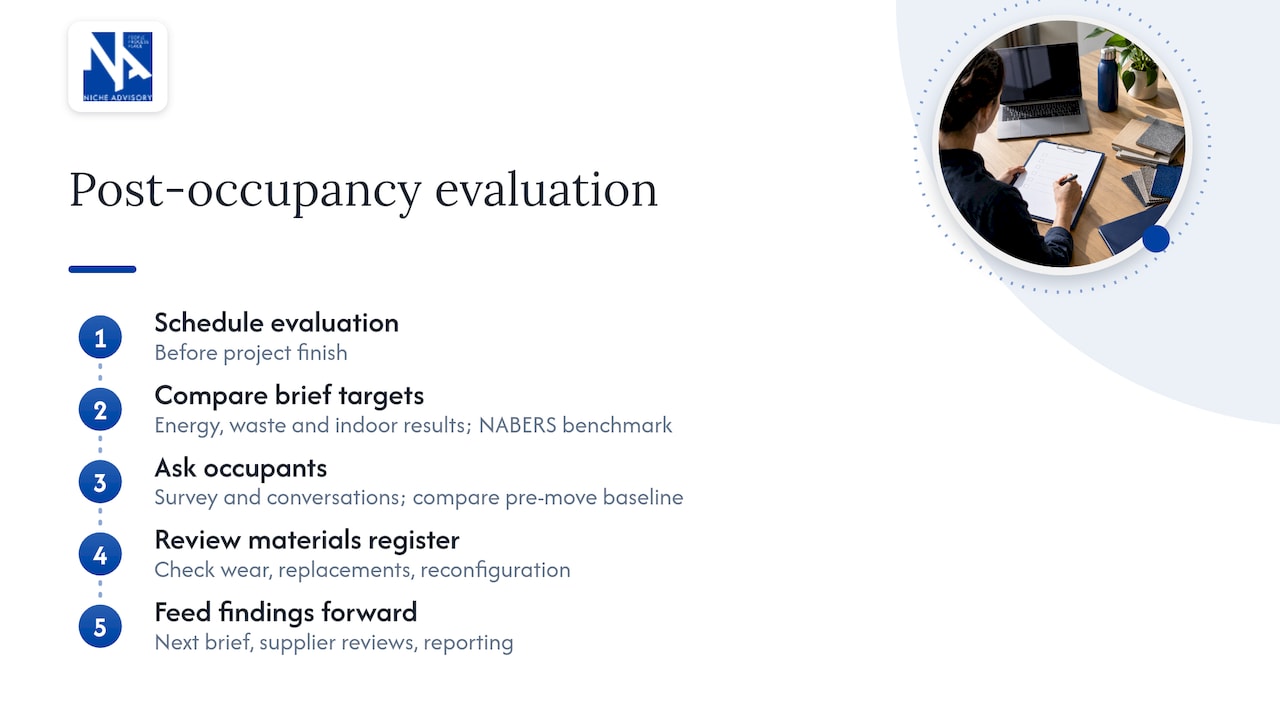
Then ask the people. A short survey and a handful of conversations a few months after move-in will tell you whether light, air quality, noise and temperature feel right, and whether the new waste stations are actually being used. Compare results with any pre-move baseline you took. Without a baseline, you can only describe the outcome, not prove improvement.
Review the materials register at the same time. Check what has been replaced, what is wearing badly and what could be reconfigured rather than discarded. Feed the findings into the next brief, your supplier reviews and your reporting. Senior leaders increasingly treat sustainability investment as a competitive advantage, and credible post-occupancy results are the evidence that supports that view.
How can we help you deliver a sustainable fitout?
We act for tenants and owner-occupiers, never landlords, so our advice stays independent. Our team combines workplace strategy, workplace design, project and construction management and corporate tenant advocacy, so sustainability targets are locked into the brief and followed through delivery. Review our project and construction management service, then contact us for a sustainability-first briefing.
FAQ
What is the most effective way to make an office fitout sustainable?
Design for reuse and reconfiguration, and reuse existing furniture and fittings before buying anything new. This can help avoid repeated strip-outs and reduce fitout waste and carbon.
Which ratings measure a sustainable office fitout?
NABERS offers tenancy indoor environment, waste and energy ratings that tenants can use. Green Star Fitouts is another framework to consider when setting sustainability goals.
Does a sustainable fitout cost more?
Some items, such as high-performance glazing or living walls, add upfront cost. Others, such as LED lighting and reused furniture, reduce spending, so the net result depends on the mix you choose.
When should you set sustainability targets?
Set sustainability targets in the brief, before design starts. Early decisions can influence energy demand, materials and waste systems, so set sustainability targets in the brief before design starts.
Sources
- Openrepository
- Office Buildings | NABERS
- Minns Labor Government cuts waste and saves with office reuse program | NSW Government