A hub and spoke office is a workplace model with one central office (the hub) and several smaller locations (the spokes) closer to where your people live. The hub is for collaboration, culture and client work. The spokes give staff a proper workplace without a long commute. For many Australian businesses it sits between a single big headquarters and fully remote work. It can work well, but only when each location has a clear job and your leases are flexible enough to change as the model settles.
This guide explains the model in plain terms, shows how it runs day to day, sets out the benefits and risks with Australian evidence, and covers the lease and planning questions that decide whether it pays off.
TL;DR
- A hub and spoke office pairs a central headquarters with smaller satellite offices, often in flexible space, placed near where staff live.
- It suits businesses with dispersed staff and long commutes. Sydney’s established hubs such as Parramatta, Macquarie Park and North Sydney make it practical there.
- Give every location a defined purpose, and back it with room booking and clear team rules, or the model drifts into empty desks and disconnected teams.
- Keep lease terms short or flexible at the spokes, and right-size the hub before you renew it.
- Test the numbers on attendance, commute and occupancy cost before you sign anything.
Table of Contents
- What a hub and spoke office is
- Why Australian businesses are looking at it
- How it works day to day
- Benefits for Australian businesses
- Risks and how to manage them
- Choosing the right locations in Sydney and beyond
- Lease and portfolio decisions that make or break the model
- A practical roadmap
- How we help
- FAQ
- Sources
What a hub and spoke office is
The RICS Property Journal describes the model as a company with a head office in a significant location, such as a CBD, plus several satellite offices, including flexible-space facilities. Property analysts writing for Centuria put it another way: the central CBD headquarters shrinks, and more satellite offices open in fringe markets.
So there are three moving parts:
- The hub is the main office. It carries the company’s identity, large meeting rooms, leadership presence and client-facing space.
- The spokes are smaller offices, often hot-desking floors, in suburban or regional centres near staff homes or key clients.
- Home usually stays in the mix for focused work or care responsibilities.
The model is not the same as simply having branch offices. Branches are usually organised by function or region, with their own managers and local work. In a hub and spoke model, staff from the same team may be spread across locations and move between them depending on the task.
What people mean by a hub room
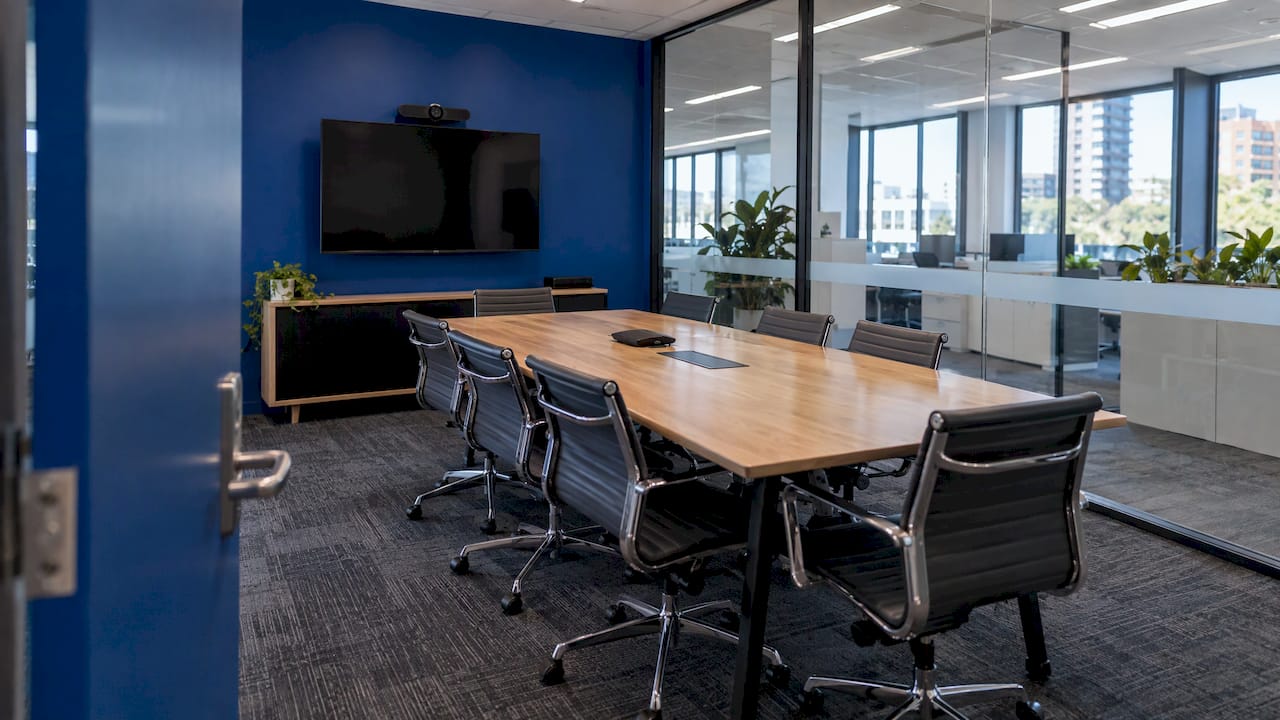
The phrase “hub room” is used loosely. In this article we use it to mean a shared room in an office set up for team gatherings and cross-site meetings, with the technology to bring remote colleagues in. If you plan one, treat it as part of the hub’s meeting space rather than a separate site. Our guide to hybrid meeting rooms covers how to fit out rooms like this for Australian offices.
Why Australian businesses are looking at it
Two pressures push businesses towards the model: commuting and underused space.
On commuting, HILDA research cited by Centuria found weekly commuting time in Australia rose to 4.5 hours in 2017, up from 3.7 hours in 2002, based on interviews with more than 17,000 Australians. JLL’s head of research for Australia told the RICS Property Journal that as Sydney’s population dispersed into new growth corridors over a decade, the average commute time rose 15%, and that companies had begun splitting tenancies between the CBD and other commercial hubs.
On space, a survey of 1,600 Australian office workers reported by Banking Day found the desk ratio in Australian offices fell from eight desks for every 10 people before the pandemic to five for 10 afterwards, with many staff working from home a couple of days a week. If your headquarters was sized for full attendance, you are probably paying for desks nobody uses.
Home working is also now normal. Roy Morgan reported in August 2025 that more than 6.7 million Australians, or 46% of employed Australians, worked from home at least some of the time, based on interviews with 41,449 employed Australians between July 2024 and June 2025.
How common are satellite offices? A study of 459 businesses in Greater Sydney, published in PubMed Central, found 34.72% of sampled organisations said they would use satellite offices in 2023, covering an average 14.34% of staff, or one in 6.7 employees. So spokes typically serve a minority of staff alongside a retained hub, not the whole workforce.
How it works day to day
The model only works when people can choose the right place for the task.
Hub for connection. Staff come to the hub for planning sessions, onboarding, client meetings and team events. The Urban Developer reports that employees can book space in the hub for important meetings and use nearby spokes for everyday work, keeping face-to-face collaboration while giving them more control over commutes and schedules.
Spokes for routine work. A spoke is where someone with a 90-minute trip to the CBD can do a normal day within a short drive or train ride of home. Think hot desks, a few meeting rooms and quiet space for calls.
Home for concentration. Deep individual work or care duties often suit home.
Space types each site needs
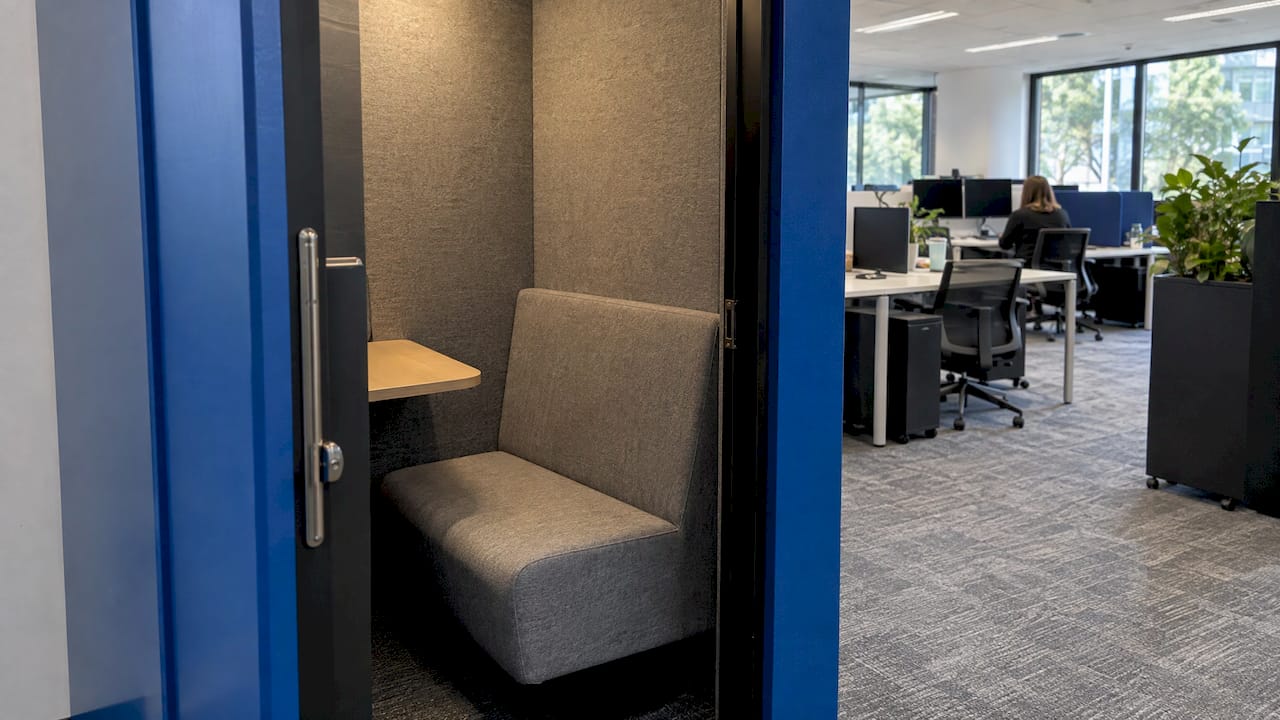
MIT Sloan Management Review recommends offering meeting and collaboration rooms, phone booths for calls and video, quiet rooms for focused work, and non-assigned desks chosen according to the behaviour they are meant to support. That mix is a useful brief for a spoke fitout, scaled to the headcount you expect.
Technology and booking
The same MIT Sloan piece describes integrated scheduling that lets people reserve rooms across locations and keeps the online and offline experience consistent. Without it, people turn up to find no desk or a full meeting room, and trust in the model erodes quickly.
Booking data also tells you how each site is really used, which feeds directly into lease decisions. Variable occupancy changes servicing needs too: a site busy on Tuesday and Wednesday and quiet on Friday needs a cleaning schedule built around actual use, and this guide to office cleaning frequency is a handy way to set tiers you can measure.
Give each location a purpose
It is easy to open spokes and hope for the best. A better start is to write down, for each location, what it is for and who it serves. This matches the view in a Hub Australia perspective piece that decentralisation should complement the central office, not replace it, with locations deliberately assigned different purposes.
A simple purpose statement might read:
| Location | Main purpose | Typical users | Key features |
|---|---|---|---|
| Hub | Collaboration, client meetings, culture | All staff, visitors | Large meeting rooms, hybrid rooms, reception |
| Spoke | Everyday work near home | Staff in that catchment | Hot desks, phone booths, small meeting rooms |
| Home | Focused work, care duties | Anyone, by agreement | Team norms on availability |
Benefits for Australian businesses
- Shorter commutes and better work-life balance. In the AHRI 2025 report on hybrid and flexible working practices, 65% of employers named better work-life balance as a leading advantage of hybrid work, and 45% perceived improved productivity. Spokes extend that logic by shortening the days people do travel in.
- A wider talent pool. The same AHRI research found 41% of employers identified a greater ability to attract candidates. Reducing dependence on one central location lets you recruit from a wider geographic area.
- Lower occupancy cost. The Urban Developer notes a business can combine a smaller CBD presence with desks in less urban areas, using interchangeable or dedicated spaces to reduce real estate and overhead costs. Whether you actually save depends on the rent, incentives and fitout cost at each site, which is why modelling comes before commitment.
- Resilience. Several locations spread operational risk if one site is disrupted.
- Family-friendly patterns. Centuria’s Jason Huljich argued in 2020 that decentralised working suits families where both parents work, since staff can leave on time and take a short trip home via day care.
Risks and how to manage them
The model has real challenges, and the better planned it is, the less they bite.
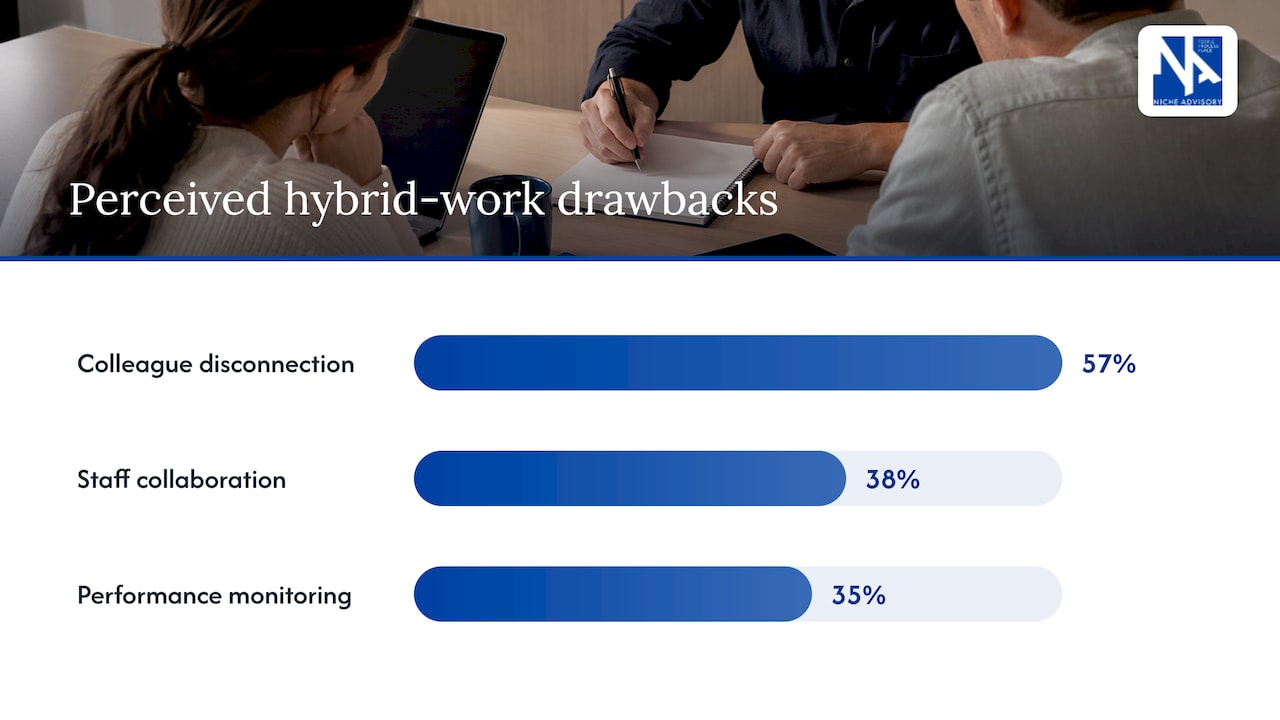
Disconnection. In the AHRI survey, the leading perceived disadvantages of hybrid work were disconnection between colleagues (57%), staff collaboration (38%) and performance monitoring (35%). The Urban Developer lists isolation, missed manager check-ins, miscommunication and strained relationships as risks when teams are split across locations. Manage this by scheduling anchor days when teams meet at the hub, and by training managers to run check-ins consistently across sites.
Flexibility needs structure. The National Mental Health Commission’s hybrid work guide found the office-first hybrid model was the most common in its Australian research at 35%, but workers were least satisfied with it and reported lower self-perceived performance and greater work-life interference. A rigid attendance rule is not the point of a hub and spoke model. Choice within clear expectations is.
Underused budgets. Banking Day notes that satellite offices divide a workforce geographically rather than by job function, and that lower attendance can undermine the value of existing office budgets. If you open spokes but keep a full-size hub, you pay twice. Plan the hub’s size and lease term together with the spokes.
Complexity. Several leases, fitouts and suppliers need more governance than one. That is manageable with a single owner for the portfolio and consistent standards across sites.
Choosing the right locations in Sydney and beyond
Start with where your people live, not where rents are cheapest. Map home postcodes against rail, motorway and bus access, then look at clusters. JLL’s Andrew Ballantyne told RICS that Sydney’s established commercial hubs, such as Parramatta, Macquarie Park and North Sydney, make the model viable there. Centuria’s Grant Nichols noted in 2020 that tenants were leaning towards offices within short reach of workers’ homes, ideally near public transport.
Then test each candidate against four questions:
- How many staff live within a comfortable trip, and how many would use it at least twice a week?
- Does the building offer the transport, amenity and parking your people expect?
- What lease flexibility is available: term, expansion and contraction rights, and exit options?
- Can the space support the mix of rooms in the table above?
For Sydney, our pages on office space in Sydney and commercial office space in Sydney Olympic Park show how those precincts compare. For market conditions across the country, see our Australian office market overview.
Coworking or your own lease?
The Urban Developer recommends coworking and flexible offices for implementing the model, since they bring ready infrastructure, flexible terms, multiple locations and meeting rooms for cross-site connection. That makes them a sensible way to pilot a spoke before committing to a conventional lease. Once a location proves itself, a dedicated tenancy gives you control over branding, fitout and cost per desk, but also longer commitments, so compare both on total cost over the term, including fitout, incentives and make-good.
Lease and portfolio decisions that make or break the model
Most hub and spoke plans fail on the property side, not the people side. A few points deserve attention before you sign.
- Hub renewal timing. The hub is usually your largest commitment. If the lease is nearing expiry, use that window to right-size it. Our hybrid workplace strategy article covers getting the lease side right for hybrid teams.
- Flexibility rights. Negotiate options to reduce space, sublease or terminate early where you can. Flexible rights have a cost, so weigh them against your confidence in future headcount.
- Spoke term length. Short terms or flexible agreements suit early spokes. Longer terms suit sites with proven, steady demand.
- Make-good. Every extra tenancy is another end-of-lease reinstatement obligation. Understand it at the start, not the end.
- Incentives. Landlord incentives vary with market conditions and term. Our guide on landlord incentive negotiation sets out the steps.
- Space sizing. Use realistic attendance data rather than headcount. Our Sydney office space calculator guide shows what to include.
For wider context on how working from home shapes lease choices, read our flexible office strategy analysis.
A practical roadmap
- Collect the data. Gather badge swipes, booking data, home postcodes and a staff survey on commute and working preferences.
- Define the purpose of each location. Use the table above as a starting point and write down which activities belong where.
- Model scenarios. Compare your current portfolio against two or three hub and spoke options on total occupancy cost, commute savings and risk.
- Pilot. Start with one or two spokes, ideally in flexible space, for a defined period.
- Set team norms. Agree anchor days, meeting rules and how managers run check-ins across locations.
- Measure and adjust. Review utilisation, engagement and cost, then decide which spokes to extend, move or close.
Our workplace strategy framework walks through the first 90 days of this kind of program.
How we help
Niche Advisory acts exclusively for tenants and owner-occupiers, never landlords. We combine workplace strategy with independent corporate tenant advocacy, so the question of whether a hub and spoke model fits your business is answered before any lease is negotiated. If you are weighing a new hub, a first spoke or a portfolio review, talk to our team about your situation.
FAQ
What is the hub and spoke model in simple terms?
It is a workplace structure with a central office (the hub) and smaller satellite offices (the spokes) near where staff live. People use the hub for collaboration and the spokes for everyday work. Many also work from home on some days.
What are the disadvantages of the hub and spoke model?
The main risks are disconnection between colleagues, weaker collaboration and uneven management oversight across sites. In AHRI’s 2025 research, disconnection was the most commonly cited disadvantage of hybrid work, at 57%. Clear anchor days, shared booking tools and consistent manager check-ins reduce these risks.
Is hub and spoke cheaper than one large office?
It can be, particularly where a smaller CBD hub is paired with flexible spokes. The result depends on rent, incentives, fitout and make-good at every site, so model total cost before you commit. Running a full-size hub alongside several spokes can cost more.
How many staff should use a spoke?
There is no fixed number. In a Greater Sydney study of 459 businesses, organisations planning satellite offices expected them to serve an average of 14.34% of staff. Your own figure should come from where your people live and how often they would use a spoke.
Should I start with coworking spaces for spokes?
Often yes. Flexible space offers ready infrastructure and shorter terms, so you can learn how staff actually use a location before taking a conventional lease. Compare the cost per desk over the full term against a dedicated tenancy once demand is clear.
Sources
- A reset for Australian workplaces, RICS Property Journal
- Metro market magic, Centuria Capital
- Satellite offices and hubs, Banking Day
- More than 6.7 million Australians work from home, Roy Morgan
- The impact of COVID-19 and working from home on the office market, PubMed Central
- Why Companies Should Adopt a Hub-and-Spoke Work Model, MIT Sloan Management Review
- Hybrid and Flexible Working Practices in Australian Workplaces 2025, AHRI
- Hybrid Work Model guide, National Mental Health Commission