
If you’re negotiating a commercial lease, you can typically expect a mix of rent-free periods, fit-out contributions, rent abatements or landlord-paid outgoings. The single most important action is quantifying your true costs and recording the agreed incentive in a Heads of Agreement, with clear payment timing and clawback terms, before the lease is drafted.
TL;DR:
- Uncapped outgoings can add 20% to 50% on top of base rent, so compare total occupancy costs rather than rent alone.
- Support your ask with a cost schedule, comparable leases, and at least one contractor quote; confirm contribution caps, approvals, and eligible expenses in writing.
- Landlords generally prefer fit out contributions or temporary rent free periods over rent cuts, and may offer more for a longer lease term.
- Record the incentive’s value, payment timing, evidence requirements, GST treatment, ownership, and clawback terms in the Heads of Agreement before lease drafting begins.
- Have finance review contributions before signing the Heads of Agreement: amounts outstanding at lease commencement affect initial lease liability and right of use asset measurement.
Table of Contents
- What landlord incentives are and which will matter for your business
- How to prepare and quantify your incentive ask
- Negotiation tactics and landlord perspective
- Documenting the deal: HOA, incentive deed and lease
- Accounting and tax implications to resolve before you accept
- When to appoint a tenant adviser and what they deliver
- Negotiation playbook: 9 concise steps to claim and secure incentives
- Tips for negotiating incentive packages across multiple leases
- How Niche Advisory supports tenant-side incentive negotiations
- FAQ
- Sources
What landlord incentives are and which will matter for your business
A lease incentive is a concession the landlord offers to secure your tenancy, and it comes in a few recognised forms. The Australian Taxation Office identifies rent-free periods, rent abatements, lessor contributions to fit-outs and lessor payment of outgoings as the common types in Australian commercial leasing.
Which one matters most depends on your business’s cashflow and capital position. A rent-free period eases cashflow early but does nothing for the capital cost of building out a space. A fit-out contribution does the opposite: it offsets the upfront capex of construction, which usually matters more for occupiers doing a significant build. Outgoings paid by the landlord quietly reduce your total occupancy cost, which can add 20 to 50% on top of base rent if left uncapped.
Incentives are typically documented through one of these contractual forms:
- A Heads of Agreement setting out the commercial terms before legal drafting begins
- A standalone incentive deed describing the value, conditions and repayment triggers
- A schedule or special condition attached directly to the lease
How to prepare and quantify your incentive ask
Landlords respond to numbers, not general requests for help. Before you raise incentives in negotiation, build a case that is specific, evidenced and timed.
- Build a cost schedule covering fit-out, relocation, IT and trading start-up losses.
- Convert that total into a concrete ask: either a number of rent-free months or a dollar figure for fit-out contribution.
- Pull comparable lease data and recent market evidence for similar buildings and precincts to show your ask is reasonable.
- Assemble contractor quotes, a realistic fit-out timeline and a short written case for why the incentive benefits the landlord too, such as a longer term or stronger covenant.
Pro Tip: Quote your fit-out costs as a range backed by at least one contractor quote; a single unverified figure is the first thing a landlord’s agent will challenge.
A credible ask also means checking what the fit-out contribution actually covers before you rely on it. The NSW Small Business Commissioner notes that fit-out contributions are commonly conditional on evidence, approvals and an agreed maximum cost, so tenants should confirm in writing who pays for what before signing anything.
Negotiation tactics and landlord perspective
Incentives are an exchange, not a gift. Landlords give up value today in return for something they want: a longer lease term, early access to begin fit-out works, or a tenant with a stronger covenant that reduces their vacancy risk.
Understanding what landlords prefer sharpens how you frame your ask:
- Landlords generally favour incentives that don’t reduce face rent, because headline rent supports the building’s valuation.
- A fit-out contribution or a time-limited rent-free period is usually easier to secure than a straight discount on rent.
- Staged, milestone-based reimbursements reduce the landlord’s risk and make a larger incentive more palatable.
- Vacancy levels and softer market conditions in a precinct typically make landlords more flexible on both the size and structure of an incentive.
Offering a longer term or agreeing to an earlier commencement for fit-out access often unlocks a better incentive than asking for cash alone.
Documenting the deal: HOA, incentive deed and lease
Ambiguity in incentive documentation is where tenants lose money. The Victorian Government Solicitor’s Office advises recording the incentive type, value, timing and clawback triggers in the Heads of Agreement before the lease itself is drafted, specifically to avoid disputes once the relationship has moved past the negotiation stage.
Your HOA, and later your incentive deed, should cover:
- The incentive type and its exact value.
- Payment timing, including whether reimbursement happens progressively or only after practical completion.
- The evidence required to trigger payment, such as certified invoices or a certificate of occupancy.
- GST treatment of the contribution.
- Who owns the fit-out at lease end, and the make-good obligations that follow.
A few checks matter beyond the checklist itself:
- Confirm clawback triggers distinguish a landlord-caused termination from a tenant default.
- Make sure wording is identical across the HOA, the incentive deed and the final lease; a mismatched date or condition between documents is a common and avoidable dispute trigger.
- Narrow and taper clawback obligations over time rather than accepting a clause that demands full repayment on any breach, a structure Prosper Law flags as common but negotiable.
Accounting and tax implications to resolve before you accept
Incentives aren’t just a commercial win, they change your accounting position. Under AASB 16 guidance, lessor contributions and reimbursements outstanding at lease commencement affect both the initial lease liability and the right-of-use asset measurement.
Before you sign, work through these with your finance team:
- Confirm whether the fit-out contribution is inclusive or exclusive of GST, since this changes your real cashflow position.
- Check how the timing of your incentive matches your lease term and fit-out payback period, since a mismatch can distort your effective rent calculation.
- Loop in finance or accounting early, before the HOA is signed, rather than after terms are locked in.
One contribution still outstanding at commencement date can shift your reported lease liability, which is why AASB 16 treatment belongs in the negotiation conversation, not after it.
When to appoint a tenant adviser and what they deliver
Incentive negotiation involves legal, accounting and construction detail happening at once, which is exactly where an experienced tenant adviser earns their fee. An experienced tenant adviser typically works exclusively on the tenant side, not for landlords, ensuring recommendations are built around your occupancy cost and risk, not the landlord’s.
A tenant adviser typically:
- Quantifies the incentive ask using market comparables and your own cost data.
- Drafts and negotiates the Heads of Agreement and incentive deed.
- Manages fit-out payment mechanics so milestones align with your cashflow.
- Reviews make-good exposure before it’s locked into the lease.
The right time to bring one in is before the HOA is signed, not after, while market testing is still live and disadvantageous terms haven’t yet been locked in.
Negotiation playbook: 9 concise steps to claim and secure incentives
A tenant incentive negotiation tends to follow the same sequence, regardless of building or precinct.
- Build your cost schedule for fit-out, relocation and trading start-up.
- Benchmark comparable lease incentives for similar buildings nearby.
- Decide your target structure: rent-free, fit-out contribution, abatement or a blend.
- Open negotiation with a specific, evidenced ask rather than a general request.
- Draft HOA terms covering value, timing, conditions and clawback.
- Send the HOA for legal review before signing.
- Send the incentive structure for accounting review against AASB 16 treatment.
- Finalise the incentive deed with milestone-based payment triggers.
- Monitor fit-out milestones and lodge evidence promptly to trigger payment.
Escalate to legal review at HOA stage, not lease stage, and loop in accounting as soon as a fit-out contribution figure is on the table.
Pro Tip: Negotiate at least one progress payment during fit-out rather than a single payment on completion; it’s the simplest way to protect your cashflow through a multi-month build.
Tips for negotiating incentive packages across multiple leases
Portfolio and multi-lease transactions change the negotiation dynamic because you’re offering the landlord, or a group of landlords, scale rather than a single tenancy. That leverage is worth using deliberately rather than assuming it will be recognised automatically.
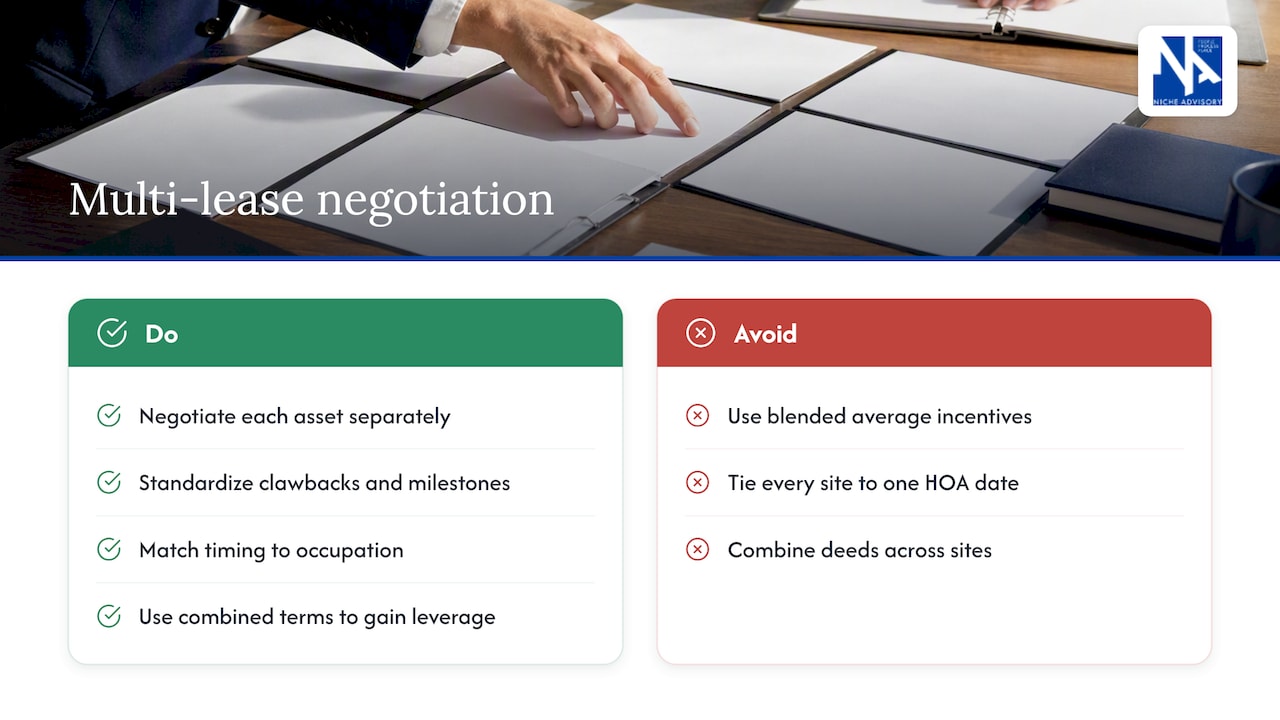
Start by negotiating incentives on a per-asset basis even when the deal covers multiple sites, since building age, vacancy and fit-out condition differ site by site and a blended average incentive usually favours the landlord. Push for consistency in clawback terms and payment milestones across every lease in the package, so your finance and facilities teams aren’t managing several different sets of conditions and deadlines.
Where leases in the portfolio have staggered start dates, negotiate incentive timing that matches your actual occupation schedule for each site, rather than a single HOA date that doesn’t reflect when fit-out work actually begins at each location. If one landlord owns several of the buildings in your portfolio, that relationship is itself a lever: a longer combined term or an earlier renewal commitment across multiple sites can justify a stronger fit-out contribution or a longer rent-free period than any single lease would secure alone.
Finally, keep documentation genuinely separate for each asset. A combined incentive deed across sites can create confusion about which clawback trigger applies to which lease if one tenancy is exited early while others continue, so insist each site’s incentive terms stand on their own even within a broader portfolio agreement.
How Niche Advisory supports tenant-side incentive negotiations
Incentive negotiation works best when it’s handled alongside the lease, the fit-out program and the accounting review, rather than as three separate conversations. Our corporate tenant advocacy service covers exactly that: quantifying your incentive ask, negotiating the Heads of Agreement and incentive deed, and managing make-good risk, backed by over 12 years working only for tenants and owner-occupiers, never landlords.
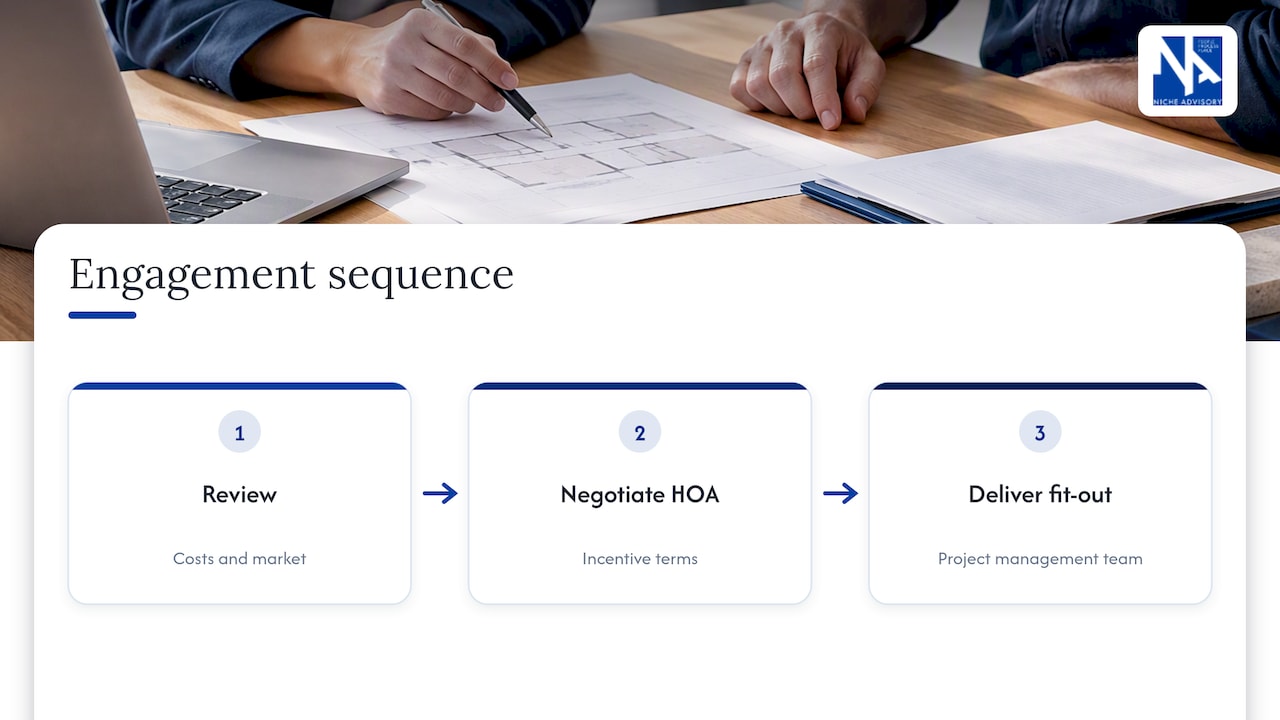
A typical engagement starts with a cost and market review, moves through HOA negotiation, and carries through to fit-out delivery via our project and construction management team, so the incentive structure you negotiate actually matches how the build gets delivered. For legal drafting support on heads of agreement and incentive deeds, Simons George Legal is a resource worth having alongside your adviser.
If you’re heading into a lease negotiation or renewal, get in touch with our team to talk through your incentive strategy before terms are locked in.
This article is general information, not a substitute for advice from a qualified lawyer. Consult a qualified legal professional about your own circumstances before acting on anything here.
FAQ
What incentives can a commercial tenant typically negotiate?
Common incentives include rent-free periods, rent abatements, landlord contributions to fit-out costs and landlord-paid outgoings, as recognised by the Australian Taxation Office. Which combination suits you depends on whether your priority is early cashflow relief or offsetting fit-out capital costs.
When should I document an incentive in writing?
Incentive terms should be recorded in a Heads of Agreement before the lease is drafted, specifying the value, timing, conditions and clawback triggers, as recommended by the Victorian Government Solicitor’s Office. Leaving these details to be settled during lease drafting increases the risk of disputes later.
How do clawback clauses on fit-out incentives usually work?
Clawback clauses typically require you to repay some or all of the incentive if you exit the lease early, and practitioner guidance recommends negotiating these so the repayment obligation tapers over time rather than applying in full regardless of when the exit happens. They should also distinguish a tenant-caused exit from a landlord-caused termination.
Does a fit-out contribution affect our lease accounting?
Yes. Under AASB 16 guidance, a fit-out contribution still outstanding at lease commencement affects the initial lease liability and right-of-use asset measurement, so it’s worth reviewing with your finance team before the terms are locked in.
When is it worth appointing a tenant adviser for incentive negotiation?
An adviser is most useful before the Heads of Agreement is signed, while market testing is still active and terms aren’t yet locked in. Experienced tenant advisers work only for tenants, and a typical engagement covers quantifying the incentive ask, drafting the HOA and incentive deed, and managing fit-out payment milestones.
Sources
- Australian Taxation Office guidance (lease incentives)
- Victorian Government Solicitor’s Office: heads of agreement advice
- NSW Small Business Commissioner: fit-outs — who pays?
- Australian Government / Finance — lease incentives and AASB 16 guidance
- Prosper Law: lease incentives in commercial leases (practitioner guidance)