
Outgoings are the landlord’s operating costs for a property, and the lease determines how much of that bill lands on the tenant. Under a net lease, tenants typically pay outgoings on top of base rent; under a gross lease, the landlord folds those costs into one rent figure. Retail tenants get extra protection: state retail leasing laws limit what landlords can recover and require disclosure before you sign.
TL;DR:
- Outgoings are divided into statutory charges, building costs, and shared facility expenses, with capital works, depreciation, and mortgage costs never recoverable from tenants.
- Most tenants should verify historical outgoings data, compare it with current estimates, and ensure lease clauses specify caps, exclusions, and audit rights before signing.
- Retail leases have statutory protections limiting recoverable outgoings and requiring proper disclosure, unlike non-retail leases which rely solely on contractual terms.
- Clarity on the lease structure is crucial since gross leases bundle costs into rent, whereas net and semi-gross leases separate outgoings, often leading to significant cost variations.
- Engaging a tenant adviser can help identify potential overcharges, negotiate better terms, and effectively dispute unreasonable or improperly calculated outgoings.
Table of Contents
- What outgoings typically include in an Australian commercial lease
- How are outgoings billed: gross, net or semi-gross?
- Do retail leases get more outgoings protection than other leases?
- Lease checklist: what to negotiate before you sign
- What red flags signal an outgoings problem, and how do you dispute one?
- How do tenant advisers reduce outgoings risk in practice?
- Get outgoings right before you sign, not after
- Sources
- FAQ
What outgoings typically include in an Australian commercial lease
Outgoings fall into three broad buckets, and knowing which is which stops you signing up for costs that shouldn’t be yours.
Statutory charges cover council rates, water and, in some states, land tax (though this is restricted or banned outright in retail leases, depending on jurisdiction). Building and operating costs include building insurance, repairs, cleaning, and security. Shared facility costs cover strata levies, common-area utilities, lift servicing, landscaping, and, in shopping centres, contributions to a marketing fund.
What should never turn up on your outgoings bill:
- Capital works, such as replacing a roof or upgrading building systems
- Depreciation on the landlord’s asset
- The landlord’s own finance or mortgage costs
- Leasing commissions paid to agents
Commercial lease outgoings are distinct from base rent and can swing significantly year to year depending on building age and service levels. Before signing, compare the lease’s outgoings schedule against the landlord’s disclosure statement or, better still, the last two or three years of actual spend. If the numbers on paper don’t match what was actually charged previously, that gap is worth chasing before you sign, not after.
How are outgoings billed: gross, net or semi-gross?
The lease structure decides how outgoings hit your budget, and the differences are bigger than most tenants expect.
- Gross lease – one all-in rent figure; the landlord absorbs outgoings (or has already priced them in).
- Net lease – base rent plus outgoings billed separately; tenants under net leases can see outgoings add 20 to 50% to base rent depending on the building’s age and service level.
- Semi-gross lease – a hybrid where some costs sit inside rent and others (usually rate increases or specific categories) are billed on top.
Most landlords bill outgoings through an estimate-and-reconciliation cycle. You pay monthly instalments based on a budgeted estimate, then the landlord reconciles actual spend against that estimate at year-end. Underpay the estimate and you get a top-up invoice; overpay and you’re owed a refund.
Apportionment usually runs on your lettable area as a percentage of the building, though metered usage and base-year mechanisms (where a benchmark year’s costs set the starting point for future increases) also show up in more sophisticated leases. Vacant space should generally be excluded from the pool tenants share, since you shouldn’t subsidise a landlord’s unlet floors.
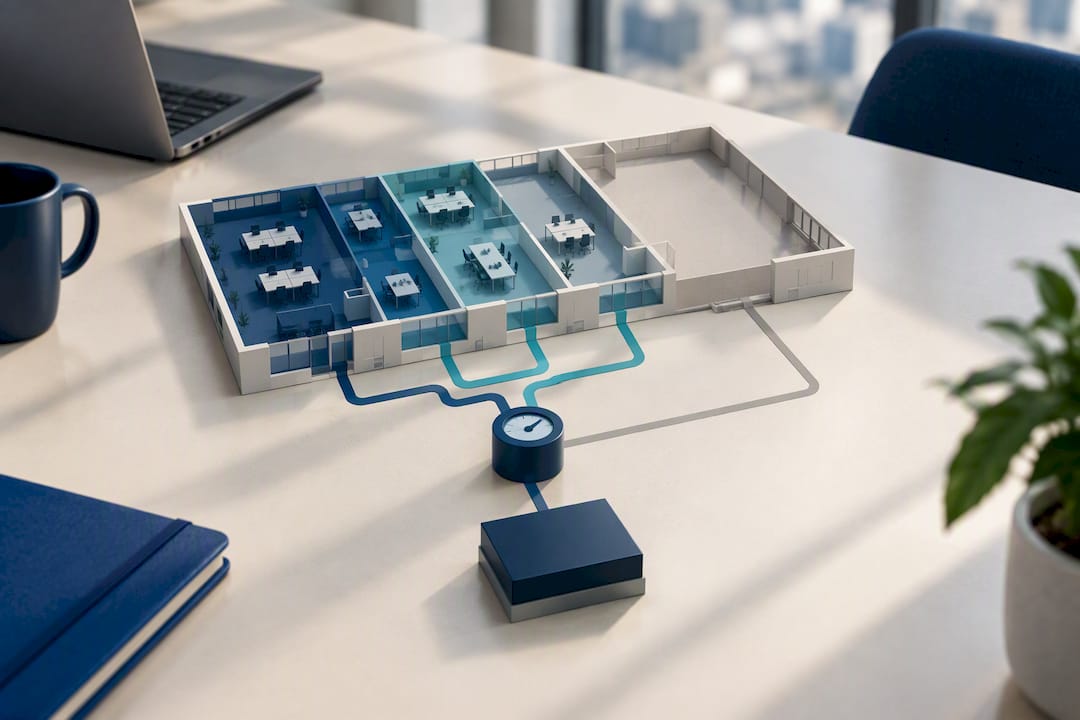
Pro Tip: Before you sign anything, request the previous two to three years of outgoings statements, the current year’s budget, and a plain-English explanation of the apportionment formula. If a landlord can’t produce historical figures, treat that as a warning sign, not an oversight.
Do retail leases get more outgoings protection than other leases?
Yes. Retail leases sit inside a dedicated legal framework that non-retail commercial and industrial leases simply don’t have.
In New South Wales, the Retail Leases Act 1994 defines outgoings, mandates disclosure statements, and says a tenant isn’t liable for outgoings the landlord failed to properly disclose. Other states go further on specific exclusions:
- Victoria’s Retail Leases Act 2003 restricts recovery of land tax and certain capital costs.
- Queensland’s Retail Shop Leases Act carries similar prohibitions.
- NSW caps land tax recovery based on a single-holding basis rather than the landlord’s full portfolio rate.
Outside retail, there’s no equivalent statutory net. Non-retail leases rely almost entirely on the contract itself, so office and industrial tenants need to negotiate explicit outgoings lists, caps, and apportionment terms into the lease document, because there’s no legislation standing behind them if the wording is vague.
Lease checklist: what to negotiate before you sign
The single biggest predictor of a painless outgoings relationship is what you negotiate into the lease before signing, not what you argue about afterwards.
Clauses worth pushing for:
- A detailed, itemised outgoings schedule rather than a vague “all outgoings” clause
- Annual caps on increases, expressed as a percentage or applied category by category
- A cap on the management fee specifically, since this is one of the most negotiable and most inflated line items
- A clearly stated base year with a defined start date
- Explicit exclusion of capital works from recoverable outgoings
- Audit rights letting you inspect invoices and receipts behind the reconciliation
Before signing, request the last two to three years of outgoings broken down by category, the current year’s budget, insurance schedules, and, for retail tenancies, the marketing fund rules and how contributions are calculated.
On tactics: propose metering for shared services where practical, narrow the scope of what counts as a recoverable outgoing, and tie increases to CPI rather than a landlord’s discretion. Push to have statutory levies excluded from any general cap, since bundling them in lets landlords use a rates spike to justify increases across everything else.
Pro Tip: Ask for the management fee to be expressed as a fixed dollar figure or a capped percentage of outgoings, not an open-ended “reasonable cost”. Open-ended fee clauses are where landlords quietly claw back margin.
Our guide on saving money on a Sydney commercial lease covers more angles for controlling total occupancy cost, not just outgoings.
What red flags signal an outgoings problem, and how do you dispute one?
Three patterns show up again and again in outgoings disputes, and all three are avoidable if you spot them early: no historical data offered before signing, a broad “all outgoings” clause with no itemised list, and capital works quietly reclassified as maintenance to pass building upgrades onto tenants. An uncapped management fee is the fourth.
If a reconciliation looks wrong, work through these steps:
- Request the underlying invoices and receipts for every disputed line item.
- Exercise your audit rights under the lease, or under retail leasing legislation if applicable.
- For retail tenancies, use the state’s retail tenancy dispute resolution process before litigating.
- Escalate to a tribunal, or bring in a lease adviser or lawyer, if informal resolution stalls.
Even where a lease technically permits a recovery, costs still need to be reasonably incurred, and tenants can challenge charges that aren’t. Reconciliation outcomes typically land one of two ways: a top-up invoice if actual costs ran ahead of your estimate instalments, or a refund credited against future rent if you overpaid. Refunds can take months to process once a dispute is raised, so document everything as you go.
How do tenant advisers reduce outgoings risk in practice?
Experienced tenant advisers do the legwork most in-house teams don’t have time for: pulling historical outgoings data, cross-checking it against the current budget, and querying every line that doesn’t stack up.
That usually means:
- Verifying two or three years of historical outgoings against invoices before accepting a landlord’s disclosure statement at face value
- Challenging management fees that exceed market benchmarks for the building type
- Testing whether a “repair” is genuinely maintenance or capital expenditure dressed up to pass the cost to tenants
- Negotiating caps, audit rights, a fair base year, and staged reconciliation timing into the lease itself, with enforceable wording rather than vague intent
Advisers earn their fee fastest in complex multi-tenant buildings, shopping centres with marketing fund contributions, and makegood or exit reconciliations where the numbers are genuinely contested. Skilled tenant representation is often what stops a capital works bill quietly becoming your problem instead of the landlord’s.
Get outgoings right before you sign, not after
There are ways to handle this yourself: read the disclosure statement line by line, request historical statements, and push back on vague clauses using the checklist above. But outgoings clauses are dense, landlords negotiate them daily, and most tenants sign a handful of leases in a career. That imbalance is exactly where costs get missed.
An independent corporate tenant advisory firm acts exclusively for tenants and owner-occupiers, never landlords, ensuring every recommendation on your outgoings clause is judged against your occupancy cost, not the deal a landlord wants to close. Our corporate tenant advocacy service starts with a focused lease review and historic outgoings check, then builds a negotiation plan around the caps, exclusions, and audit rights that actually matter for your building. If a reconciliation has already gone sideways, our dispute resolution services pick up from there. Consider consulting a tenant advisory service before your next renewal or reconciliation deadline to find out where your current lease is exposed.
Sources
Legislation: Retail Leases Act 1994 (NSW), Retail Leases Act 2003 (Victoria). Advice: Small Business NSW on outgoings, Sprintlaw’s retail lease outgoings guide, and MyLawFirm’s practitioner guide to what tenants actually pay.
- Outgoings in a commercial lease in Australia | Sprintlaw
- Retail Leases Act 1994 – NSW legislation
- Outgoings in Commercial Leases: What tenants actually pay | MyLawFirm
FAQ
What is rent plus outgoings?
Rent plus outgoings describes a net lease structure where the tenant pays base rent separately from the landlord’s recoverable operating costs, such as rates, insurance, and cleaning. It contrasts with a gross lease, where a single rent figure already includes those costs, and outgoings under a net lease can add 20 to 50% on top of base rent depending on the building.
What is an outgoings reconciliation?
An outgoings reconciliation is the year-end process where a landlord compares the estimated outgoings a tenant paid in monthly instalments against actual costs incurred. If actual costs came in higher, the tenant receives a top-up invoice; if lower, they’re owed a refund or credit.
Are all commercial tenants entitled to outgoings disclosure?
Retail tenants get statutory disclosure rights under state retail leasing legislation, including estimates before signing and reconciliation statements each year. Non-retail tenants have no automatic entitlement. Recoverable outgoings for office and industrial leases depend entirely on what’s negotiated into the contract.
Can a landlord charge for capital works as an outgoing?
Generally, no. Capital works, such as major building upgrades or structural replacements, sit outside recoverable outgoings, though landlords sometimes attempt to reclassify capital expenditure as maintenance to shift the cost to tenants. A lease should explicitly exclude capital works from the outgoings clause to close off that risk.
What should I do if I think I’ve been overcharged for outgoings?
Request the invoices and receipts behind the disputed charges and exercise any audit rights in your lease. If informal resolution fails, retail tenants can use their state’s retail tenancy dispute process, and any tenant can escalate to a tribunal or bring in a tenant adviser to negotiate a resolution.