Sending staff to a coworking space does not hand your safety duties to the operator. Under Australian work health and safety (WHS) law, your business keeps its own duty to staff, the operator holds a separate duty for the premises, and the two must be coordinated. Managing coworking risk well means mapping those duties, running the four-step risk process on the space, and tying the arrangement to a lease and space strategy that suits your business. Niche Advisory acts exclusively for tenants and owner-occupiers, which is the viewpoint this article takes.
TL;DR
- Your business is a PCBU (person conducting a business or undertaking) and keeps the primary WHS duty for staff in a coworking space. The operator’s duty sits alongside yours.
- Use the four-step process: identify hazards, assess risks, control them, review the controls.
- Every PCBU must have an emergency plan. In a shared building, plans are coordinated with the operator, but you cannot assume theirs covers you.
- Psychosocial risks, such as noise, layout and isolation, are now an explicit part of WHS compliance across Australia.
- Test the arrangement against your wider property portfolio before signing a membership or licence.
Table of Contents
- Who is responsible when your staff work in a coworking space
- The four-step process applied to a coworking floor
- The hazards worth checking in a shared space
- Emergency planning in a building you do not run
- Checking that your controls work
- Where coworking risk meets property strategy
- How Niche Advisory can help
- FAQ
- Sources
Who is responsible when your staff work in a coworking space
The duty holders are defined in Safe Work Australia’s model Code of Practice on managing the work environment and facilities (December 2025). It sets out three layers.
Your business (the PCBU). You owe the primary duty under section 19 of the model WHS Act. That means eliminating physical and psychosocial risks to your workers, or minimising them so far as is reasonably practicable. Safe Work Australia’s PCBU page adds that this covers layout, lighting, floors, entries and exits, ventilation, accessible facilities such as toilets, drinking water and first aid, plus instruction, training and supervision. “Health” includes psychological health.
The person with management or control of the workplace. In a coworking space this is the operator, landlord or property manager. Under section 20 they must ensure the workplace and its entries and exits are without risks. You share duties with them, and all duty holders must consult, cooperate and coordinate.
Your directors and officers. They carry a separate due diligence duty: understanding the business’s WHS risks, making sure resources are available and verifying that safety processes work. As Sprintlaw explains, appointing a manager to administer the policy does not remove the business’s own duty.
Your workers. They must take reasonable care of themselves and others and follow reasonable instructions and notified policies, according to business.gov.au.
The practical consequence: a membership agreement is a risk document as well as a commercial one. Before staff move in, you want to know what the operator controls (entries, fire systems, building services) and what you still control (your people, your instructions, your reporting).
The four-step process applied to a coworking floor
The How to Manage WHS Risks Code (November 2025) sets out four steps, with consultation with workers and health and safety representatives at each one.
- Identify hazards. Walk the space your people will use at the times they will use it. Look at entries, desks, shared kitchens, meeting rooms, lifts, car parks and after-hours access. Ask staff what bothers them.
- Assess the risks, if necessary. Work out the nature, severity and likelihood of harm. The Code allows you to skip this for known risks with known controls.
- Control the risks. Choose the most effective controls that are reasonably practicable and keep them effective over time.
- Review the controls. Check they work as planned.
“Reasonably practicable” has a specific meaning. SafeWork NSW says it weighs the likelihood of the hazard, the degree of harm, what you know or ought to know, the controls available and whether their cost is grossly disproportionate to the risk.
The same page sets out the hierarchy of controls, from most to least effective: eliminate, substitute, isolate, engineering controls, administrative controls, and personal protective equipment as a last resort. Combinations are allowed. In a coworking space you rarely control the building, so many of your controls will be administrative (policies, training, check-in rules). That makes the operator’s engineering controls, such as access systems and fire safety, the part to confirm in writing.
The hazards worth checking in a shared space
Physical environment
The Code directs duty holders to assess safe entry, exit and movement, work-area space, floors and slip or trip hazards, lighting, ventilation, and heat or cold. It names concrete benchmarks:
- aisles and walkways at least 600 mm wide and kept clear
- slip-resistant, appropriately secured entries
- fully adjustable chairs with five-point bases
- regular floor inspections for trailing cables, uneven edges, loose mats and carpet tiles
Flinders University’s office safety guidance notes there is no specific regulation on space per person, but work areas must allow tasks without awkward postures, and emergency exit paths must stay free of obstruction. Hot-desking and shared furniture mean workstation set-up needs to be repeatable: a short desk set-up guide for staff is an administrative control that costs little.
Working alone and after hours
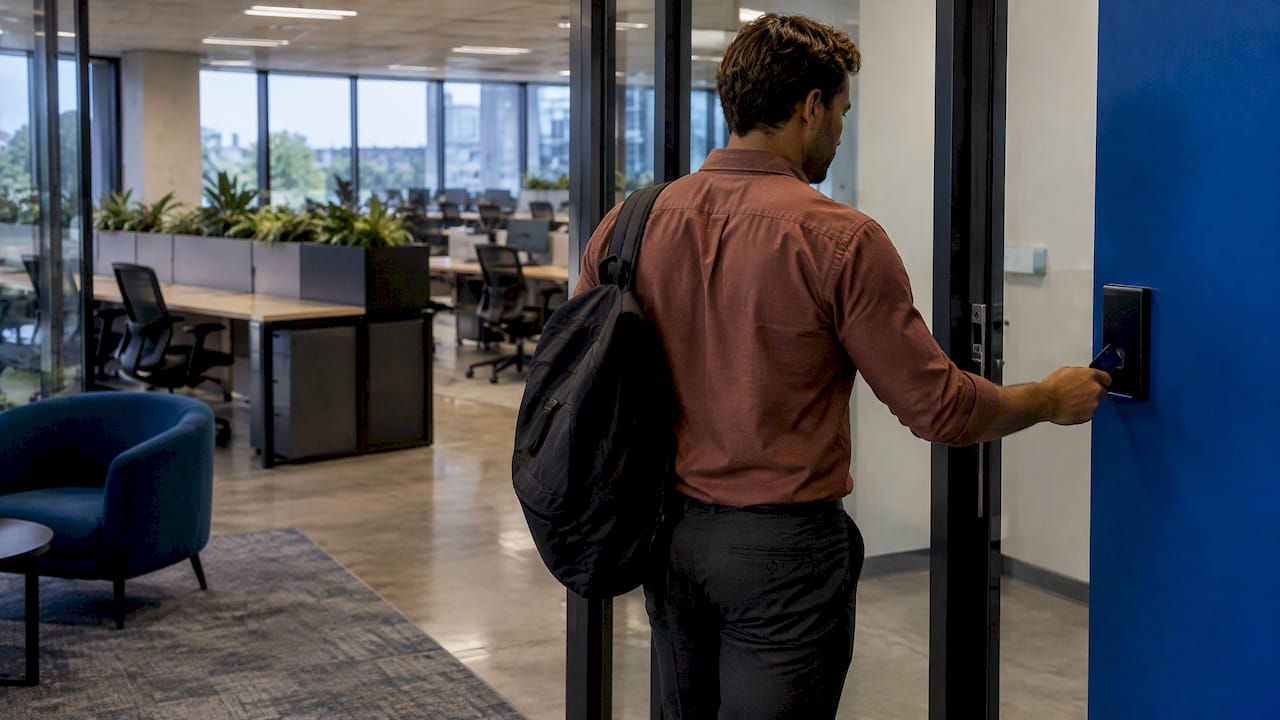
A worker can be isolated even with others nearby. The NSW-hosted Code gives the example of a cleaner alone at night in a city office building. Under WHS Regulation 48 a PCBU must manage remote or isolated work risks, including effective communication with the worker. The main hazards are exposure to violence and poor access to emergency help. If your staff use a coworking space early, late or on weekends, confirm how access control works then, and who can be reached.
Psychosocial risks
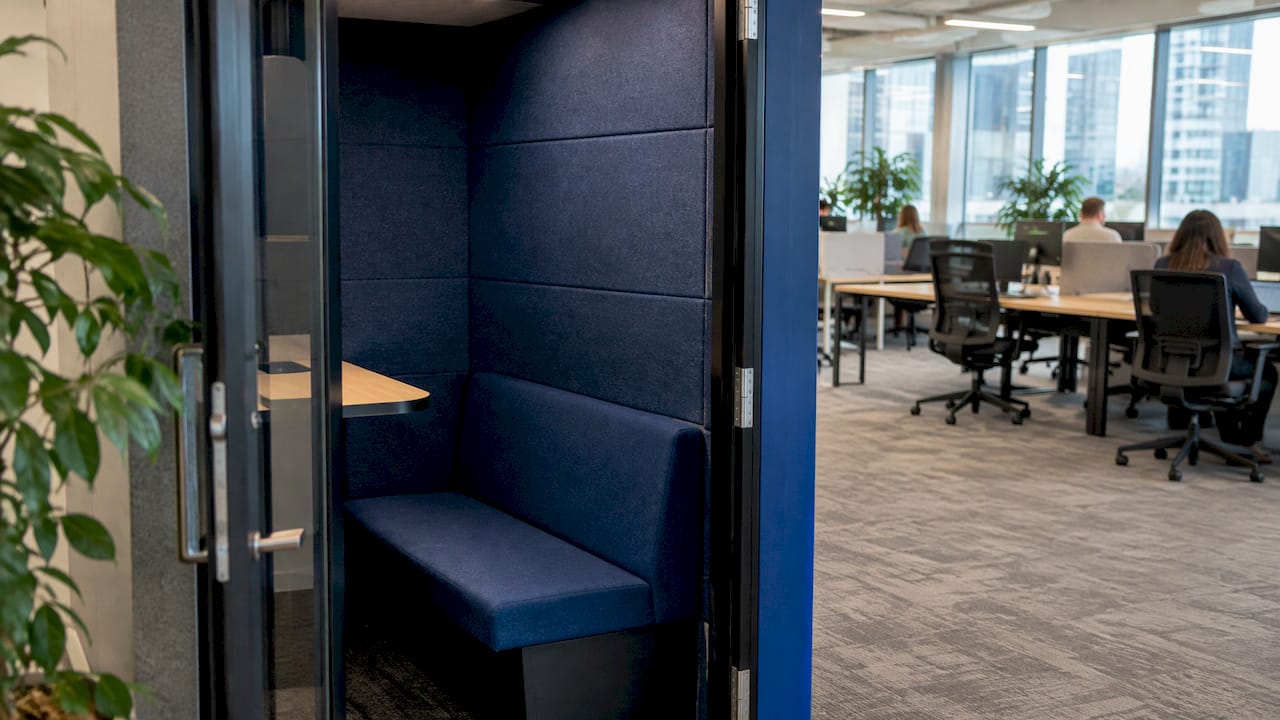
Psychosocial hazards are those that can cause psychological harm. The South Australian Code on psychosocial hazards (commenced 19 February 2026) lists poor physical environments, including high noise, uncomfortable temperatures, poor lighting and poorly maintained amenities, as sources. These are familiar problems on open-plan coworking floors. The Code also notes that hazards can combine, so controlling one, such as noise, can reduce others. Quiet zones and phone booths are worth asking about.
The legal footing has tightened. Norton Rose Fulbright’s WHS briefing reports that every Australian state and territory now has specific psychosocial risk duties, and that Victoria’s Psychological Health Regulations 2025 commenced on 1 December 2025. In NSW, the WHS Regulation 2025 commenced on 22 August 2025, and regulation 55C requires psychosocial risks to be managed using the hierarchy of control measures.
Notification rules are also widening. The same briefing notes model-law changes covering violent incidents, extended absences of 15 or more days, and suicides or attempted suicides. These apply in each jurisdiction once adopted, so check your state’s position.
Emergency planning in a building you do not run
Safe Work Australia states that every workplace must have an emergency plan. Where duties are shared with other PCBUs, you coordinate for a master plan under Regulation 43.
The Code says the plan for a multi-business workplace should be coordinated by the person with management or control, in consultation with all tenants. It must cover:
- effective response and evacuation
- notifying emergency services at the earliest opportunity
- medical treatment
- effective communication between the coordinator and everyone at the workplace
- testing, with evacuation drills at least every 12 months
- information and training for workers
A new tenant triggers a plan review. Coordination does not transfer the duty: The Duty Holder points out that Regulation 43 sits on each PCBU, so you cannot simply assume the operator’s plan covers your people.
A workable routine: ask for the building’s emergency plan before the first day, name your own warden or contact for your staff, brief them on exits and assembly points, and join the operator’s drill. business.gov.au also recommends a first aid assessment and enough trained first aiders to cover absences, with first aid equipment easy to find.
Checking that your controls work
The review step is where many arrangements fall down, because the space feels like someone else’s. The Code says to review controls when they are not effective, before changes that may create new risks, when a new hazard appears, when consultation indicates it, or when a health and safety representative asks. The questions it poses are useful in a coworking setting:
- Do the controls work in design and in practice?
- Did they introduce new problems?
- Are procedures followed and was training effective?
- Are workers raising concerns promptly?
- Are incidents becoming less frequent and less severe?
SafeWork NSW suggests practical methods: analysing the injury register, regular site walks with health and safety representatives, and toolbox talks. Put a quarterly walk and a standing agenda item in your team meetings. Keep a short record, because due diligence means being able to show the process works.
Where coworking risk meets property strategy
Risk management is cheaper to get right at the decision point than after staff have moved in. For most businesses that decision sits inside a bigger question: how much space do you need, where, and on what lease terms.
A few connections are worth making:
- Space per person. Crowding drives both physical and psychosocial risk. Our guide on right-sizing office space per employee sets out typical ranges for Australian businesses.
- Hybrid patterns. If staff attend a few days a week, flexible space can suit part of your portfolio. See how flexible office strategy shapes lease choices.
- Timing. Lease events create the leverage to change your footprint. Occupancy planning ahead of lease events helps you decide when coworking belongs in the mix.
- Moves. If a coworking trial leads to a relocation, a relocation risk assessment keeps the same discipline running.
- Wellbeing space. Quiet and wellness areas can address psychosocial hazards; see office wellness rooms that meet WHS rules.
This is where independence matters. A coworking operator earns from occupancy, and a landlord earns from your lease. Niche Advisory acts exclusively for tenants and owner-occupiers, never landlords, and combines workplace strategy with execution across corporate real estate. That lets the safety question, the space question and the lease question be answered together, against your business goals rather than someone else’s vacancy.
How Niche Advisory can help
If you are weighing coworking against a lease, a renewal or a relocation, our workplace strategy work looks at how your people actually use space and what that means for your property decisions. Our corporate tenant advocacy service represents you as a tenant in search and negotiation. Both are tenant-side only. Overseas companies entering the Australian market can start with our guide to comparing office space in Australia. To discuss your situation, get in touch with Niche Advisory.
FAQ
Is the coworking operator responsible for my staff’s safety?
The operator, as the person with management or control of the workplace, must ensure the workplace and its entries and exits are without risks. Your business still holds the primary duty for its own workers. Both must consult, cooperate and coordinate.
Do I need my own emergency plan in a coworking space?
Yes. Every PCBU must have an emergency plan, and where duties are shared, plans are coordinated into a master plan under Regulation 43. The operator usually coordinates it, but the duty remains on each business.
Do psychosocial risks apply to coworking?
Yes. WHS law covers physical and psychological health. Noise, poor lighting, uncomfortable temperatures and isolation are recognised hazard sources, and every Australian state and territory now has specific psychosocial duties.
How often should emergency drills run?
The Code says evacuation practice drills should occur at least every 12 months. A new tenant triggers a plan review.
What are the four steps to manage a workplace risk?
Identify hazards, assess risks if necessary, control them with the most effective reasonably practicable measures, and review those controls. Consult workers at each step.
Sources
- Managing the work environment and facilities, Safe Work Australia (December 2025)
- Duties of a PCBU, Safe Work Australia
- Health and Safety Policy, Sprintlaw Australia
- Work health and safety, business.gov.au
- Work Health and Safety (How to Manage WHS Risks) Code 2025
- Managing hazards and risks, SafeWork NSW
- Office safety and workstation assessments, Flinders University
- Code of Practice: Managing the work environment and facilities, SafeWork NSW
- Managing Psychosocial Hazards at Work, SafeWork SA (February 2026)
- WHS Law Briefing, Norton Rose Fulbright
- Legislation, SafeWork NSW
- Emergency plans and procedures, Safe Work Australia
- Fire safety and emergency plans in high-occupancy workplaces, The Duty Holder